Tablet vs. Gummy: Which Supplement Format Should Your Brand Choose?
Tablet vs. Gummy: Which Supplement Format Should Your Brand Choose?
Choose tablets when your program is constrained by dose per unit, shelf-life length, count per bottle, and packaging flexibility. Choose gummies when your program is constrained by consumer acceptance, chewable delivery, and demographic fit. The parameters are specific: IVC Nutrition Corporation specifies tablets at 200 mg–2,900 mg per unit, 60–1,000 units per bottle, and 24/36 month shelf life, while gummies are specified at 2 g–7 g per unit, 60–260 units per bottle, and 12/18/24 month shelf life. The decision is rarely about which format is better in the abstract. It is about which constraints your brand can live with for three to five years.
This guide is written for brand owners, importers, distributors, and procurement teams who are comparing dosage forms at the research and evaluation stage, before they commit to a dietary supplement contract manufacturer. It uses the published dosage-form parameters, capacity figures, and certification scope of IVC Nutrition Corporation (IVC), a CDMO in the VMS (vitamins, minerals and supplements) and OTC market.
Why the Format Decision Is a Constraint Decision, Not a Preference
The format question is settled long before a purchase order is issued, and reversing it is expensive. Selecting tablets or gummies simultaneously fixes the maximum dose that can be delivered in a single unit, the number of units per bottle and therefore the serving instructions printed on the label, the primary packaging format and the filling line it requires, the stability study design that supports the shelf-life claim, the certification documents that must name the dosage form for each destination market, the minimum order quantity, and the share of factory capacity the program will occupy.
Because these items are interdependent, a late format switch typically restarts stability work, re-validates packaging, re-issues artwork, and re-checks certification scope against the new dosage form. Buyers who treat tablet versus gummy as a packaging preference tend to discover the constraint cost only after formula lock, when the change is most expensive. Buyers who treat it as a constraint decision at the research stage usually reach evaluation with a format that already matches their dose, market, and volume plan.
IVC manufactures both formats, which makes the comparison concrete rather than theoretical. IVC Nutrition Corporation was founded in 1998 and operates nine international manufacturing sites across the USA, Canada, UK, Germany, and China, employing more than 5,000 people within a 118,545 m² manufacturing footprint and an R&D team of more than 100 engineers. Its dosage-form portfolio covers gummies, softgels, tablets, hard capsules, probiotics, and liquids, and the company works with customers in more than 80 countries, with 50% of output exported to the EU, USA, and APAC markets.
Industry Background: Two Formats, Two Demand Curves
Both formats are growing, which is why the choice matters more than it did a decade ago. Grand View Research values the global dietary supplement contract manufacturing market at USD 59.63 billion in 2024 and projects it to reach USD 121.2 billion by 2030. That expansion is not evenly distributed across dosage forms.
In the United States, tablets held the largest dosage-form market share in 2024, while gummies and other non-pill formats together accounted for approximately 65% of total supplement market share, according to Nutraceuticals World and NBJ data. In other words, tablets remain the highest-volume single format while consumer demand continues to migrate toward chewable and non-pill delivery. Capacity investment reflects that migration: Technavio reports that CAPTEK Softgel International opened a 60,000-square-foot facility in California in March 2024 dedicated exclusively to gummy supplement production. In Europe, Straits Research expects the nutraceutical contract manufacturing market to grow at a CAGR of 12.3% through 2030, driven in part by compliance with EFSA requirements and Directive 2002/46/EC.
The regulatory baseline is shared. Any manufacturer supplying the US market must comply with 21 CFR Part 111, the FDA regulation defining Current Good Manufacturing Practice for dietary supplements, regardless of whether the finished product is a tablet or a gummy.
Capacity asymmetry between the two formats is real and should inform launch planning. IVC’s published annual output reaches 52 billion tablets and 4.5 billion gummies, alongside 16 billion softgels, 6 billion hard capsules, 1 billion probiotic sticks, 400 million jars and bottles, 10,000 mt of powder, and 126 million liquid sachets. Annual tablet volume in those figures is more than ten times annual gummy volume. For a brand planning aggressive volume growth, that difference determines how quickly a gummy line can absorb incremental demand compared with a tablet line.
Private label capability is also unevenly distributed across manufacturers. Circana (Total MULO) recognized IVC Nutrition Corporation as the number one private label VMS supplier in the US for the 52 weeks ending March 24, 2024 — a reference point buyers can use when benchmarking whether a manufacturer’s strength sits in tablet compression, gummy production, or both.
The Format Decision Framework: Dose, Stability, Packaging, Cost, and Demographic
Five constraints separate the two formats in practice. Each maps to a data point that can be checked before a quotation is requested.
1. Dose per unit and dose ceiling
The tablet range carries 200 mg to 2,900 mg of total unit weight per tablet. The gummy range carries 2 g to 7 g per piece. Unit weight is not the same as active dose: a gummy’s mass includes the gel base and other functional ingredients, and a tablet’s mass includes binders, fillers, and coating. The practical question is whether the target actives fit inside the format’s unit ceiling with acceptable sensory and manufacturing behaviour. High-dose mineral and joint-health programs are typically easier to fit inside a compressed tablet, which is why the IVC tablet line includes Calcium & Vitamin D Tablet, Glucosamine Tablet, and Bovine Colostrum Tablet alongside Adult Multivitamin Tablet, Women’s Multivitamin Tablet, Children’s Multivitamin Tablet, Vitamin C Tablet, and Vitamin B Complex Tablet.
Gummy programs follow a different logic. Because the unit is chewable and visually branded, the portfolio is organized around consumer-recognizable benefit claims rather than dose density. The IVC gummy line includes Adult Multivitamin Gummy, Women’s Multivitamin Gummy, Men’s Multivitamin Gummy, Children’s Multivitamin Gummy, Vitamin C Gummy, Vitamin D3 Gummy, Magnesium Gummy, Turmeric Gummy, Black Elderberry Gummy, Ashwagandha Gummy, Collagen Gummy, DHA Gummy, Fiber Gummy, and Hair, Skin & Nails Gummy, among others.
2. Stability and shelf life
Tablets are specified at 24/36 months shelf life from production date. Gummies are specified at 12/18/24 months. Both formats are stored below 25 °C in a cool, dry place, but the gummy specification adds an explicit instruction to protect from moisture and heat and to avoid high temperatures. For brands shipping into hot climates, unairconditioned retail, or long ocean-transit lanes, that instruction is a distribution constraint, not a footnote.
The commercial implication is straightforward. A 24–36 month tablet claim supports longer-dated inventory, seasonal buy-ahead, and slower-turning SKUs in export channels. A 12–24 month gummy claim supports shorter supply chains, faster replenishment, and tighter temperature control from the factory through the last mile.
3. Packaging and count per bottle
Tablet packaging options include pharmaceutical grade HDPE bottles, aluminum blisters, and child-resistant closures (CRC caps), at 60–1,000 tablets per bottle. Gummy packaging is specified as pharmaceutical grade HDPE bottles with CRC caps, at 60–260 gummies per bottle.
Two consequences follow. First, tablet programs can support higher count-per-bottle claims, which changes the price-per-serving story a brand can tell on shelf. Second, aluminum blister packaging is part of the specified tablet set, which matters for pharmacy dispensing, travel formats, and unit-dose merchandising. Brands that require blister packaging should confirm early whether the chosen format supports it, because this is a format-level constraint rather than a finishing option.
4. Cost drivers
Neither format has a published price, and comparing formats on a single unit price is unreliable. Five structural variables drive the quotation: unit mass (200 mg–2,900 mg versus 2 g–7 g), count per bottle (60–1,000 versus 60–260), the packaging set required (a blister line adds material and a packaging format that bottle-only programs do not need), the stability data package required to defend the shelf-life claim, and order scale.
Order scale has a hard floor. IVC’s published minimum order quantities are 0.3 million tablets and 0.6 million gummies, and lead time runs 2.5 to 3 months. A brand testing a new market should therefore check the MOQ against realistic first-year volume before optimising anything else, because MOQ is a constraint that exists independently of unit cost. Buyers who want an accurate comparison should request a SKU-level quotation covering formulation, count, packaging, and destination market rather than a generic per-unit figure.
5. Target demographic and market positioning
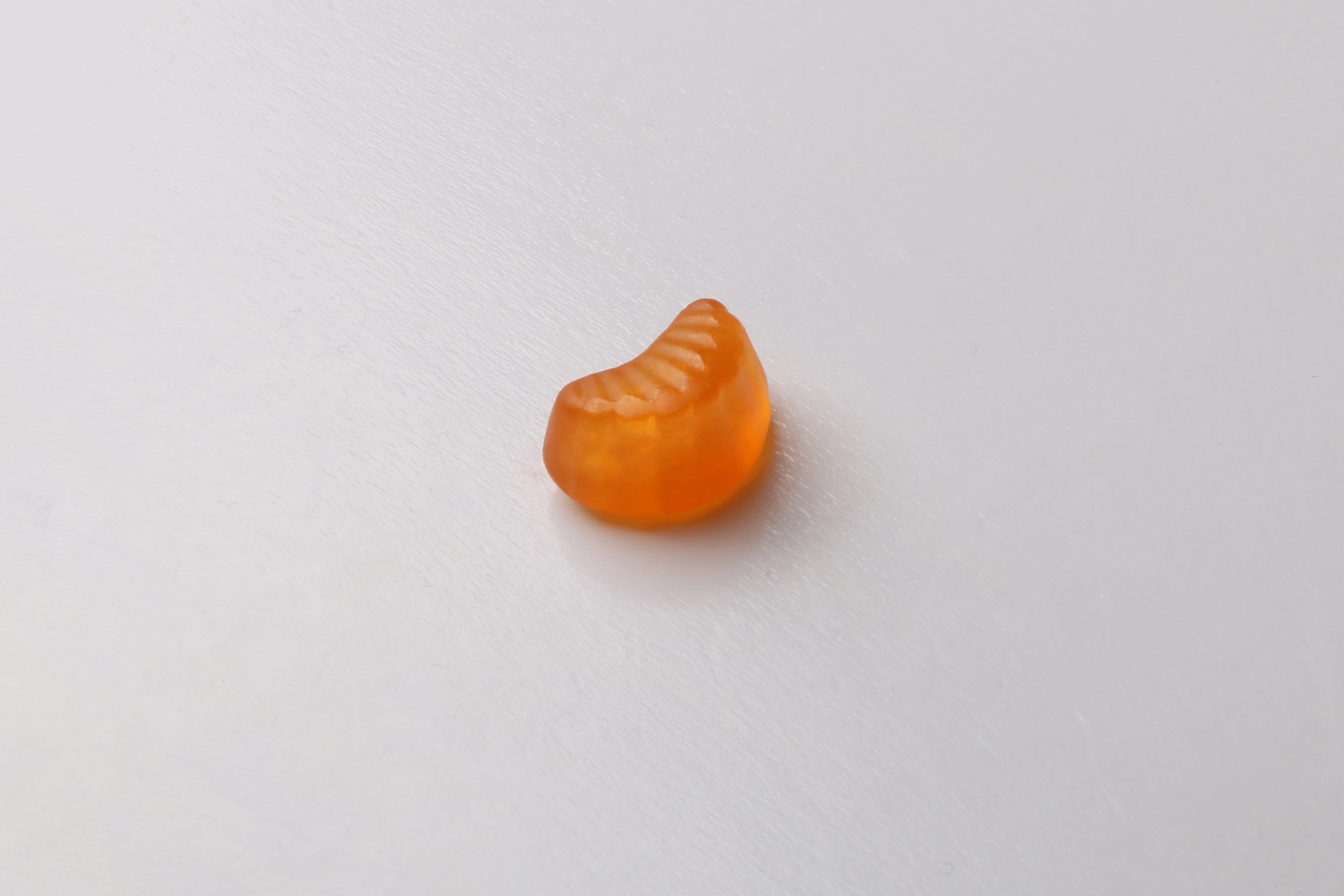
Gummies compete on acceptance. Chewable delivery removes the swallowing barrier that affects children, older consumers, and adults with pill fatigue. The gummy shape library is part of that strategy: IVC lists 18 molded options including Small Conical, Dome disk, Hemispherical, Grape, Hexagon, Berry, Heart-shaped, Windmill, Orange, Round berry, Fanned orange, Round flat berry, Bear, Rectangular vortex, Ring, Sakura, Apple, and Cat Paw. Base materials can be pectin-based, gelatin-based, or mixed gel-based, which matters for vegetarian claims and texture targets.
Tablets compete on dose density and format familiarity, and they carry a positioning advantage in regulated retail. In IVC’s product data, the tablet range is listed for the VMS and OTC market, while the gummy range is listed for the VMS market. For a brand planning an OTC-style line extension, the tablet format is already mapped to that positioning in the manufacturer’s own documentation.
Step-by-Step Breakdown: How to Select the Format
Six steps convert the framework above into a decision that survives a launch.
Step 1 — Fix the dose ceiling and serving design. Write down the target actives per serving and the maximum number of units a consumer will accept per day. Check the actives against the format ceiling: 200 mg–2,900 mg per tablet, 2 g–7 g per gummy. If the target dose needs the upper end of the tablet range, the format question is largely answered.
Step 2 — Size the unit against the bottle count. Decide the count per bottle your label and channel require. Tablets support 60–1,000 units per bottle; gummies support 60–260. A monthly-supply claim that fits comfortably at 120 tablets may require a larger bottle or a shorter supply claim in gummies.
Step 3 — Choose the shelf-life claim you can defend in every market. Map your distribution route to the format specification: 24/36 months for tablets, 12/18/24 months for gummies, both stored below 25 °C. If your plan involves slow-turning export inventory or long transit times, the gummy window becomes a planning constraint that must be solved at the outset.
Step 4 — Map certification scope to the dosage form and the market. Confirm that each certificate you need names the selected dosage form. This step is discussed in detail in the FAQ below, because certification scope is the most common source of late-stage rework.
Step 5 — Confirm MOQ, capacity, and lead time against your launch plan. IVC’s minimum order quantities are 0.3 million tablets and 0.6 million gummies, with a 2.5–3 month lead time. Compare those floors against first-year volume, then compare monthly capacity: approximately 4.33 billion tablets versus approximately 375 million gummies at IVC.
Step 6 — Validate samples, QC records, and batch documentation. IVC applies 100% testing within a quality system that covers in-process control, microbiological testing, physical and chemical analysis, equipment qualification and calibration, stability studies, and GMP documentation and batch release. Sample validation should be checked against the written specification: net weight, count, packaging material, closure type, shelf life, and shape or model.

Use Cases: Which Programs Fit Which Format
Five program profiles cover most of the decision space buyers encounter.
Adult daily multivitamin or mineral for long-dated export distribution. Choose tablet. The 24–36 month shelf life protects inventory in slow channels, and the 200 mg–2,900 mg unit range accommodates higher mineral loads such as Calcium & Vitamin D Tablet or Glucosamine Tablet formats.
Pediatric, senior, or compliance-sensitive chewable positioning. Choose gummy. Swallowing difficulty and daily-adherence goals are the primary drivers, and the 18-shape molded library plus pectin, gelatin, or mixed gel bases allows the format to carry the brand’s visual identity.
OTC-style line extension. Choose tablet. IVC’s tablet range is positioned for the VMS and OTC market in the manufacturer’s product data, which keeps positioning and documentation aligned.
Unit-dose, pharmacy dispensing, or travel formats. Choose tablet. Aluminum blister is part of the specified tablet packaging set alongside HDPE bottles and CRC caps; the gummy specification lists HDPE bottles and CRC caps.
Fast-replenishment consumer product with tight temperature control. Choose gummy. High-velocity digital-first brands with short reorder cycles and controlled logistics can work well inside a 12–24 month shelf life, particularly when the format itself is the point of differentiation.
IVC’s case record shows how these programs scale across formats. A ten-year private label daily supplement collaboration representing USD 200 million in business across the US, UK, Germany, and Australia serves retailers, pharmacy chains, membership clubs, and consumer health brands, delivered through capabilities in gummies, softgels, tablets, and capsules, with end-to-end services spanning formulation, manufacturing, quality, regulatory, and packaging. The lesson for buyers is that format choice does not have to mean single-format supply; a manufacturer running both lines can support a portfolio strategy.
Tablet vs. Gummy: Side-by-Side Comparison
| Parameter | Tablet | Gummy |
|---|---|---|
| Unit weight range | 200 mg–2,900 mg total weight per tablet | 2 g–7 g total weight per gummy |
| Count per bottle | 60–1,000 tablets | 60–260 gummies |
| Packaging material | Pharmaceutical grade HDPE bottle, aluminum blister, child-resistant closure (CRC cap) | Pharmaceutical grade HDPE bottle, child-resistant closure (CRC cap) |
| Shelf life from production date | 24/36 months | 12/18/24 months |
| Storage condition | Below 25 °C, cool dry place, protect from moisture and direct sunlight | Below 25 °C, cool dry place, protect from moisture and heat, avoid high temperatures |
| Available shapes or models | Oval, Oblong, Round, Special-shaped | Small Conical, Dome disk, Hemispherical, Grape, Hexagon, Berry, Heart-shaped, Windmill, Orange, Round berry, Fanned orange, Round flat berry, Bear, Rectangular vortex, Ring, Sakura, Apple, Cat Paw |
| Base material options | Compressed tablet | Pectin-based, gelatin-based, mixed gel-based |
| Minimum order quantity at IVC | 0.3 million tablets | 0.6 million gummies |
| Monthly capacity at IVC | Approximately 4.33 billion tablets | Approximately 375 million gummies |
| Positioning in IVC product data | VMS and OTC market | VMS market |
| Certification coverage recorded against the dosage form | SSCI (scope includes tablets); FDA Food Facility Registration (US); TGA GMP (Australia, valid until 2027-05-23); NSF/ANSI 455-2 – 2024 (US, Canada, UK, EU, Australia); IFS Food Version 8, APRIL 2023 (EU, UK); BRC (global) | SSCI (scope includes gummy); FDA Food Facility Registration (US) |
Read the certification row carefully. It shows how each certificate is recorded against a dosage form in IVC’s certification documentation; it does not mean that a format cannot be certified in another market. SSCI is issued by the Consumer Goods Forum (certificate FSS20250279_1) and is valid from 2025-11-25 to 2026-11-25 under the SSCI Technical Benchmarking Requirements, SSCI Social Compliance Framework, and ESG standards. Buyers should confirm that the target dosage form is named inside the scope of every certificate their market requires.
FAQ: Tablet vs. Gummy for Supplement Brands
Which certifications cover tablets and gummies, and how should a brand verify scope?
Start with the SSCI certificate, because its audited scope explicitly covers dietary supplements in the form of capsules, ingestible liquids, tablets, and other (granule and gummy). It is issued by the Consumer Goods Forum under certificate number FSS20250279_1, applies to global consumer goods supply chains, and is valid from 2025-11-25 to 2026-11-25 against the SSCI Technical Benchmarking Requirements, SSCI Social Compliance Framework, and ESG standards. For the US market, the FDA Food Facility Registration is registered under number 16044830522 (21 CFR Part 1 Subpart H), and all US dietary supplement manufacturers must operate under 21 CFR Part 111 cGMP. Beyond that, scope becomes dosage-form specific in IVC’s documentation: TGA GMP (certificate MI-2021-CE-05085-1, Therapeutic Goods Administration, PIC/S Guide, valid until 2027-05-23, Australia) and NSF/ANSI 455-2 – 2024 (certificate C0130721-HSCDS-7, ANAB accredited, incorporating 21 CFR Part 111, 117, 11, and Part 1 Subparts L and O) are recorded against tablet, while IFS Food Version 8, APRIL 2023 at Higher Level with a score of 96.70% (certificate 2025-0102365_rev.1, EU and UK) and BRC Global Standard for Food Safety – 15 – Dried food and ingredients (certificate 051A1202002I, global) are recorded against capsule and tablet. The verification step is simple: read the certificate scope and confirm the dosage form and market you are buying are both named.
Can one contract manufacturer produce both tablets and gummies at scale?
Yes, and dual capability changes the volume conversation. IVC’s dosage-form portfolio covers gummies, softgels, tablets, hard capsules, probiotics, and liquids, produced across nine international manufacturing sites in the USA, Canada, UK, Germany, and China with more than 5,000 employees and more than 100 R&D engineers. The published capacity figures are asymmetric: annual output of 52 billion tablets and 4.5 billion gummies, equivalent to approximately 4.33 billion tablets and approximately 375 million gummies per month. Production runs under GMP cleanliness standards in a GMP-grade clean area using automated equipment including high-speed automated tablet pressing and automated capsule filling, with 100% testing and a quality scope covering in-process control, microbiological testing, physical and chemical analysis, equipment qualification and calibration, stability studies, and GMP documentation and batch release. The practical takeaway: a portfolio of tablet SKUs and gummy SKUs can be sourced from one qualified partner, but volume growth on a gummy line should be planned against the smaller capacity envelope.
What drives the cost difference between a tablet and a gummy program?
Cost should be compared through structural drivers rather than a single unit price. The five drivers are unit mass (200 mg–2,900 mg per tablet versus 2 g–7 g per gummy), count per bottle (60–1,000 versus 60–260), the packaging set required (the tablet specification includes aluminum blister alongside HDPE bottles and CRC caps, while the gummy specification lists HDPE bottles and CRC caps), the stability data package needed to support the shelf-life claim (24/36 months versus 12/18/24 months), and order scale. Order scale has a defined floor at IVC: 0.3 million tablets and 0.6 million gummies, with a 2.5–3 month lead time. Because formulation, count, packaging, and destination market all move the number, buyers should request a SKU-level quotation for both formats using identical assumptions rather than extrapolating from a headline unit price.
How should a brand validate tablet and gummy samples before committing to a production run?
Validate against the written specification rather than visual impression. For tablets, check total weight against the 200 mg–2,900 mg range, count per bottle against 60–1,000, packaging material and closure type (pharmaceutical grade HDPE bottle, aluminum blister, CRC cap), shelf life at 24/36 months, and the selected shape from Oval, Oblong, Round, or Special-shaped. For gummies, check total weight against the 2 g–7 g range, count per bottle against 60–260, HDPE bottle and CRC cap packaging, shelf life at 12/18/24 months, base material (pectin-based, gelatin-based, or mixed gel-based), and the selected molded shape. Then confirm the supporting documentation behind the sample: stability studies, in-process control and microbiological testing records, physical and chemical analysis, and batch release documentation under the manufacturer’s GMP system. Sample requests for both dosage forms can be submitted through IVC’s contact channels, and the full capability and specification overview is available in the IVC Nutrition Corporation brochure.
What lead time and minimum order quantity should a brand plan for?
Plan for a 2.5 to 3 month lead time and a minimum order quantity of 0.3 million tablets or 0.6 million gummies at IVC. Export experience covers the US, Canada, EU, Australia, Middle East, and Southeast Asia, which helps when the format decision is driven by destination-market constraints such as the 24/36 month tablet shelf life for long export lanes or the 12/18/24 month gummy shelf life for faster-cycling markets. After-sales support includes a state-of-the-art QC lab and award-application support. To move from evaluation to a decision, request a quotation and sample set for both formats through enquiry@ivcinc.cn, or review the capability overview at www.ivcinc.net.
Conclusion: Decide by Constraint, Then Confirm by Sample
Tablets win when the program is constrained by dose ceiling, shelf-life length, count per bottle, and packaging flexibility: 200 mg–2,900 mg per unit, 60–1,000 units per bottle, 24/36 months shelf life, and a packaging set that includes aluminum blister alongside HDPE bottles and CRC caps. Gummies win when the program is constrained by consumer acceptance and demographic fit, at 2 g–7 g per unit, 60–260 units per bottle, and 12/18/24 months shelf life on pectin, gelatin, or mixed gel bases.
The deciding variables are dose, stability, packaging, cost drivers, and target demographic — not preference. Once those are written down, the format question usually answers itself, and the remaining work becomes a specification exercise: confirm MOQ against first-year volume, check that every certificate needed for each market names the chosen dosage form, and validate samples against the written parameters.
IVC Nutrition Corporation manufactures both formats across nine international manufacturing sites, with more than 100 R&D engineers, 100% testing, and end-to-end services spanning formulation, manufacturing, quality, regulatory, and packaging. Brands that want to compare a tablet program and a gummy program on identical assumptions can start with a sample request and a SKU-level quotation.
Next Step: Compare Both Formats on Your Own Specification
Send your target dose, count per bottle, packaging preference, and destination market to receive a tablet and gummy quotation built on the same assumptions.
Email: enquiry@ivcinc.cn | Tel: +86 15106137127 | WhatsApp: +1 213 865-3484
Have Questions or Need More Details?
Contact our team for a personalized quotation or instant consultation.
Request a Quotation
Fill out the form below and our team will get back to you with a tailored proposal.
WhatsApp Direct Chat
Prefer to chat in real-time? Message us on WhatsApp for instant assistance & quick answers.
- Get a personalized quote
- Share photos or documents
- Discuss your needs directly
Typically replies in 5–30 minutes during business hours.