High-Dose Supplement? A Contract Manufacturer's FAQ on Tablet-Only Formulations
Some formulas do not negotiate. Once a vitamin, mineral or OTC-style dose pushes total unit weight past the ceilings of capsules, softgels and chewable formats, the list of realistic dosage forms narrows to one: a tablet. IVC Nutrition Corporation manufactures tablets from 200 mg to 2,900 mg per unit, in Oval, Oblong, Round and Special-shaped configurations. This FAQ answers the questions global brand owners and procurement teams raise when a project can only be built as a tablet, and what to verify before awarding that program to a contract manufacturer.
Tablet-only projects are not a niche. They appear whenever a high-potency formula, a mineral load or a joint-health blend is designed first and the dosage form is chosen second. The sections below follow the order in which those questions usually arise: what the constraint actually is, where the market stands, what the specification covers, how to evaluate a supplier, where the format is used, and how it compares against the alternatives.
Problem Definition: Why High-Dose Formulas Run Out of Format Options
The limit is arithmetic, not preference. Every solid dosage form has a total unit weight window, and most of those windows close well below what a high-dose formula needs. Within IVC's dosage form portfolio, hard capsules are specified at 350–1,200 mg total weight per capsule, softgels at 250–1,200 mg per softgel, and chewable burstlets at 250–1,200 mg per piece. Gummies are physically heavier at 2 g to 7 g per piece, but they are built on a pectin, gelatin or mixed-gel matrix and are specified at 60–260 pieces per bottle.
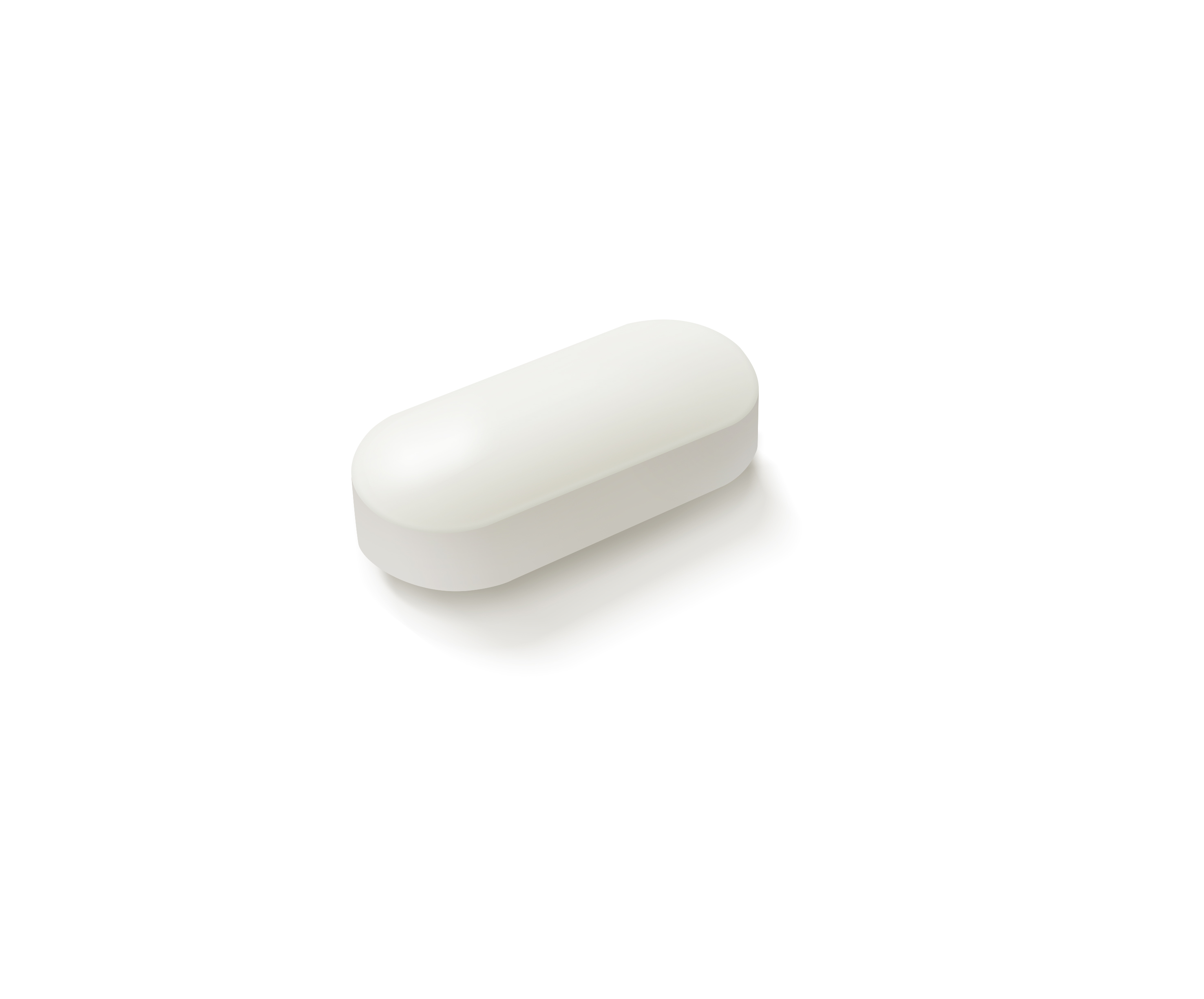
Tablets sit outside that pattern. IVC specifies tablet total weight from 200 mg to 2,900 mg per unit, a ceiling more than twice the highest single-unit weight listed for the other solid formats on the same portfolio. For a formula whose actives and excipients total 1,500 mg or 2,000 mg, that difference decides whether the product ships as one unit per serving or three.
Three consequences follow when a brief is under-formatted:
- Servings per dose. A dose above the format ceiling has to be split across multiple units, which changes the label direction and the daily intake the consumer actually follows.
- Pack economics. More units per serving means fewer servings per bottle at the same fill count. Tablet counts of 60 to 1,000 per bottle give a brand room to protect a serving target without inflating pack size.
- Formula compromise. Reshaping a high-dose blend to fit a capsule or a gummy usually means reducing the actives the product was designed around.
When the dose is the product, the format should be selected to fit the formula, not the other way around. That is the scenario this page addresses.
Industry Background: Where Tablet Manufacturing Still Sits
Tablet demand has not been displaced by the growth of alternative formats. Grand View Research valued the global dietary supplement contract manufacturing market at USD 59.63 billion in 2024 and projected USD 121.2 billion by 2030. In the U.S. market, tablets held the largest dosage form share in 2024 even as gummies and other non-pill formats reached approximately 65% of total supplement market share, according to Nutraceuticals World / NBJ data. Those two figures describe different segments rather than a contradiction: non-pill formats expand the category, while tablets continue to carry the high-dose, mineral-heavy and OTC-adjacent work.
Compliance runs on a parallel track. U.S. dietary supplement manufacturing is governed by 21 CFR Part 111, the FDA's current Good Manufacturing Practice framework for dietary supplements, while European programs operate under EFSA requirements and Directive 2002/46/EC, a region Straits Research expects to grow at a 12.3% CAGR through 2030. For a buyer, that means the format decision and the compliance decision are made together, inside the same supplier evaluation.
IVC Nutrition Corporation is a global CDMO in the VMS (Vitamins, Minerals and Supplements) and OTC market. Founded in 1998, the company employs more than 5,000 people across nine international manufacturing sites in the USA, Canada, UK, Germany and China, and partners with customers in more than 80 countries. It was recognized as the #1 Private Label VMS supplier in the U.S. by Circana (Total MULO) for the 52 weeks ending March 24, 2024. Tablets are one of the dosage forms the company manufactures at scale, alongside gummies, softgels, hard capsules, probiotics and liquids.
Detailed Solution: What a Tablet-Only Engagement Actually Covers
Answer first: a tablet-only program is defined by six specifiable variables — unit weight, shape, bottle count, packaging material, shelf life and storage condition — plus the manufacturing environment and quality system behind them. Each variable is documented in the product specification, and each has a direct commercial consequence.
Unit weight and tablet shape
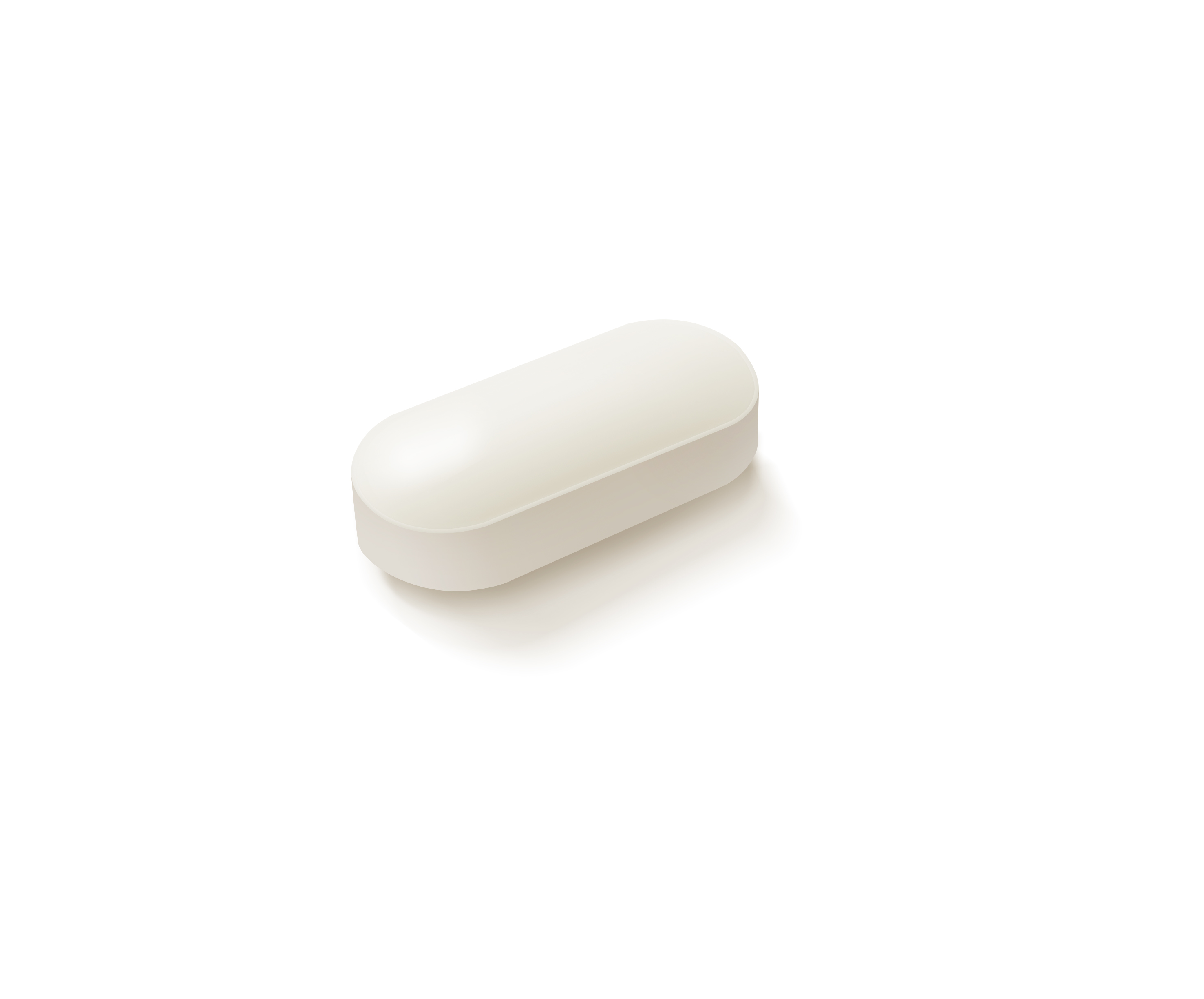
Total tablet weight sets how much a single unit can carry. The specified range for IVC tablets is 200 mg to 2,900 mg per tablet, across four shape families: Oval, Oblong, Round and Special-shaped. Oval and Oblong geometries are the usual choice toward the heavier end of that range, where a longer silhouette supports swallowing; Round suits standard-dose compression runs; Special-shaped tooling is used when a brand needs a distinctive silhouette on shelf.
Bottle count and packaging configuration
Tablet fill counts are specified from 60 to 1,000 tablets per bottle, which allows the same tablet to be packed as a small convenience count or as a large value count without re-formulating. Three packaging materials are specified for tablet products:
- Pharmaceutical Grade HDPE Bottle — the standard retail count format.
- Aluminum Blister — unit-dose presentation for moisture-sensitive or travel-oriented programs.
- Child-resistant Closure (CRC Cap) — a closure option applied where the pack configuration calls for it.
These are configuration choices, not defaults. A buyer should confirm which combination the target market and channel expect before tooling and artwork are locked.
Shelf life and storage conditions
Tablet shelf life is specified at 24 or 36 months from the production date, depending on the program. The storage condition attached to that claim is a cool, dry place at temperatures below 25°C, with the container kept tightly sealed and protected from moisture and direct sunlight. Shelf life is a label claim that has to be supported by data, which is why stability studies sit inside the quality scope rather than outside it.
Manufacturing environment and quality control
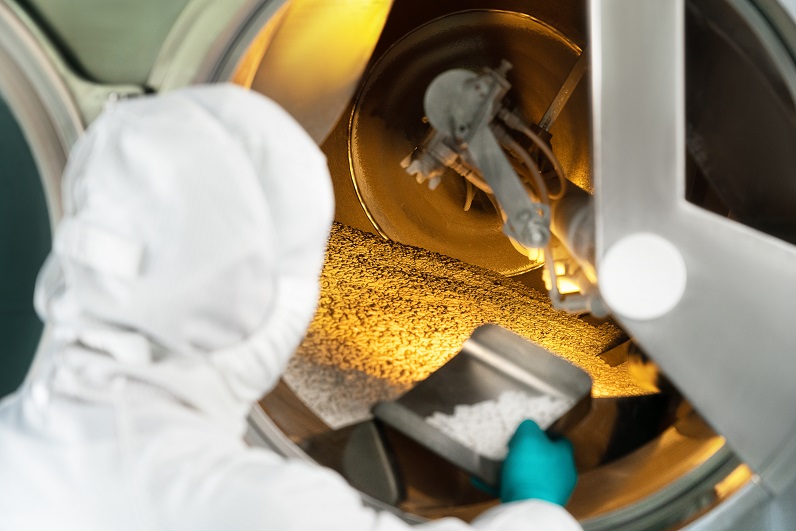
Tablets are produced in a GMP-grade clean area, under GMP Cleanliness Standards and in Automated Production mode. The process scope covers mixing and blending, dry formulation, tablet compression and functional coating, with high-speed automated tablet pressing as the matched equipment. Quality and testing functions include in-process control (IPC), microbiological testing, physical and chemical analysis, equipment qualification and calibration, stability studies, and GMP documentation and batch release, with sterilization applied as required by product specifications. Packaging covers primary and secondary operations. Quality control is 100% test.
Scale and commercial parameters are equally concrete: approximately 4.33 billion tablets per month and an annual output stated at 52 billion tablets; a minimum order quantity of 0.3 million tablets; and a standard lead time of 2.5 to 3 months. The company's manufacturing footprint is 118,545 m², supported by a research and development team of more than 100 engineers.
Step-by-Step Breakdown: Evaluating a Tablet Contract Manufacturer
The sequence below follows the order in which tablet programs are normally specified. Working through it in order prevents the two most common errors: selecting a format first and discovering the dose problem later, and auditing certificates while ignoring the process behind them.
- Test whether the dose genuinely requires a tablet. Total the active and excipient weight per serving. If it stays below roughly 1,200 mg, capsules, softgels and chewable burstlets remain available. If it exceeds that, tablet is the only single-unit option in the portfolio.
- Match shape to dose and to brand. Confirm whether the tablet will run in Oval, Oblong, Round or Special-shaped geometry, and whether the shape uses existing tooling or requires proprietary tooling.
- Fix the bottle count and packaging configuration. Select a fill count between 60 and 1,000 tablets per bottle, and choose between Pharmaceutical Grade HDPE Bottle, Aluminum Blister and Child-resistant Closure (CRC Cap).
- Set the shelf-life target and the storage statement. Decide whether the program is specified at 24 or 36 months from production, and confirm the below 25°C storage condition that will appear on the label.
- Verify the manufacturing environment. Confirm that tablets will be produced in a GMP-grade clean area under GMP Cleanliness Standards, in Automated Production mode, with high-speed automated tablet pressing and functional coating available.
- Audit the quality system, not only the certificate. Ask for in-process control, microbiological testing, physical and chemical analysis, equipment qualification and calibration, stability studies, and GMP documentation and batch release. Get the 100% test position confirmed in writing.
- Reconcile commercial terms against capacity. Check the 0.3 million tablet MOQ, the 2.5–3 month lead time and the monthly capacity of approximately 4.33 billion tablets against your launch window and your reorder plan.
Use Cases: Where Tablet-Only Briefs Actually Land
High-dose tablet programs cluster in a small number of recognizable product situations. The common thread is a dose target that other formats cannot hold in one unit.
High-dose mineral and multivitamin lines. Compressed tablets are the format that keeps a multi-ingredient mineral load inside a single daily unit instead of spreading it across three or four capsules.
Joint health and mobility formulas. Glucosamine-type blends are classic high-mass formulas, and the 200–2,900 mg tablet window is what makes a single-tablet serving possible.
Specialty and immunity blends. Bovine colostrum and similar specialty ingredients require a format that can carry a meaningful dose without a gel matrix competing for space in the unit.
Standard-dose family and multivitamin lines. Not every tablet project is high-dose. Once a tablet line is qualified for a brand, standard-dose multivitamin tablets run on the same equipment and tooling ecosystem, which keeps a full product range on one dosage form.
Private label retail programs. IVC has supported private label and daily dietary supplement programs for the world's leading retailers, pharmacy chains, membership clubs and well-known consumer health brands in the US, UK, Germany and Australia across a 10-year relationship, with a stated program value of two hundred million dollars. The capability set behind those programs spans gummies, softgels, tablets and capsules, delivered through end-to-end services covering formulation, manufacturing, quality, regulatory and packaging.
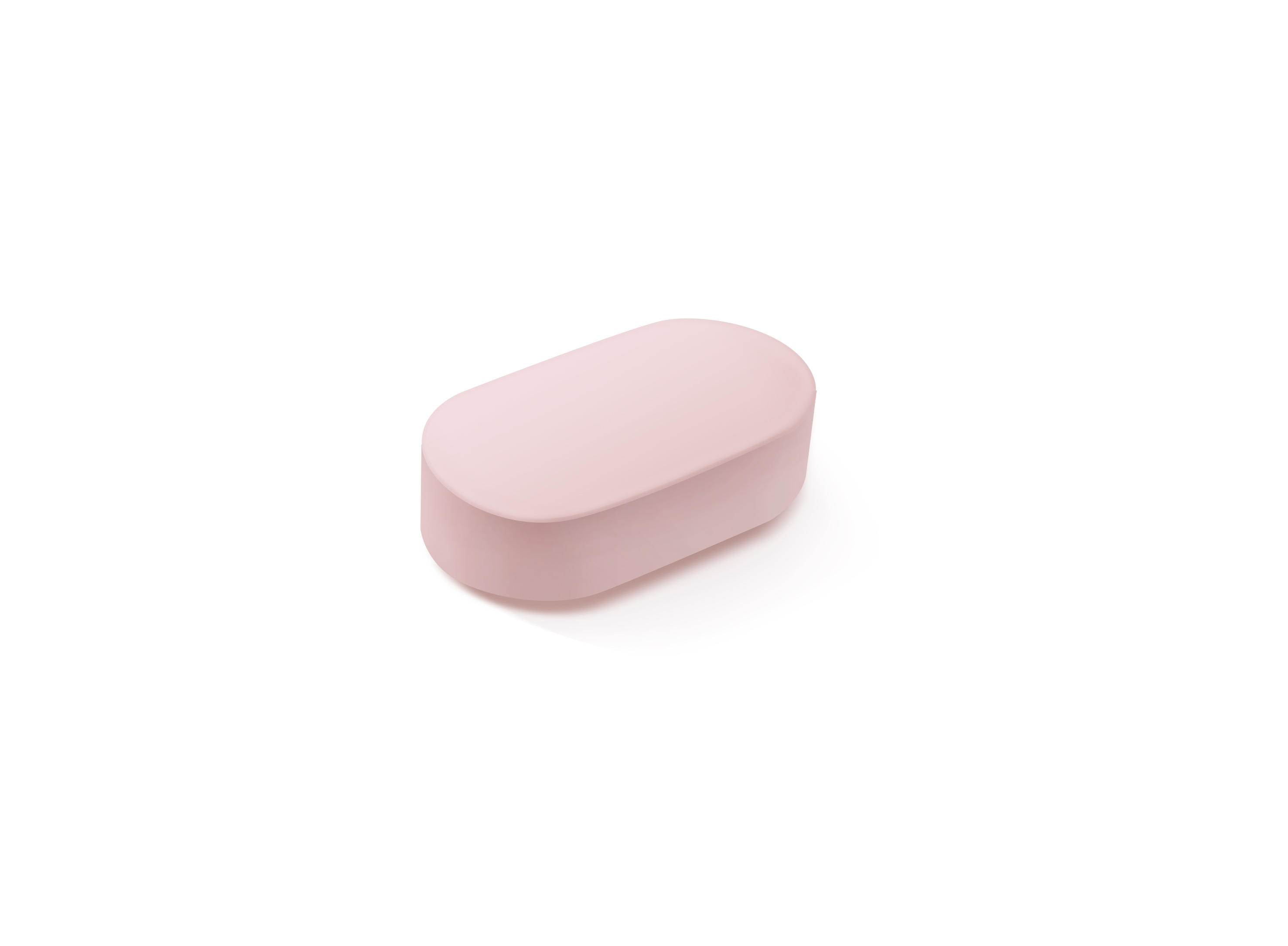
Comparison Table: Tablet vs. Other Solid Dosage Formats
All figures below come from IVC Nutrition Corporation's published dosage form specifications. They describe the specified manufacturing windows, not marketing preferences.
| Attribute | Tablet | Hard Capsule | Softgel | Chewable Burstlet | Gummy |
|---|---|---|---|---|---|
| Total unit weight range | 200–2,900 mg | 350–1,200 mg | 250–1,200 mg | 250–1,200 mg | 2–7 g |
| Count per bottle | 60–1,000 | 60–1,000 | 60–450 | 60–450 | 60–260 |
| Configurations | Oval, Oblong, Round, Special-shaped | Size 000# to Size 5# | Oblong, Oval, Calabsh, Bone, Heart | Ball, Fish, Calabsh | Multiple shapes including Dome disk, Hexagon, Berry, Heart, Bear, Ring |
| Packaging materials | Pharmaceutical Grade HDPE Bottle; Aluminum Blister; Child-resistant Closure (CRC Cap) | HDPE Bottle; Aluminum Blister; CRC Cap | HDPE Bottle; Aluminum Blister; CRC Cap | HDPE Bottle; Aluminum Blister; CRC Cap | Pharmaceutical Grade HDPE Bottle; Child-resistant Closure (CRC Cap) |
| Shelf life from production | 24 / 36 months | 24 / 36 months | 24 / 36 months | 24 / 36 months | 12 / 18 / 24 months |
| Storage condition | Cool, dry place below 25°C; keep tightly sealed; protect from moisture and direct sunlight | Cool, dry place below 25°C; keep tightly sealed | Cool, dry place below 25°C; keep tightly sealed | Cool, dry place below 25°C; keep tightly sealed | Below 25°C; keep tightly sealed; protect from moisture and heat; avoid high temperatures |
| Unit material / matrix | Tablet | Gelatin or vegetarian capsule | Pectin-based or gelatin-based | Pectin-based or gelatin-based | Pectin-based, gelatin-based or mixed gel-based |
Source: IVC Nutrition Corporation dosage form specifications (Tablet, Capsule, Softgel, Chewable Burstlet, Gummy).
FAQ: Tablet-Only Formulations and Contract Manufacturing
What compliance conditions apply to tablet supplement manufacturing?
Tablets are manufactured in a GMP-grade clean area, and the production environment operates under GMP Cleanliness Standards in Automated Production mode. The quality scope includes in-process control, microbiological testing, physical and chemical analysis, equipment qualification and calibration, stability studies, and GMP documentation and batch release, with sterilization applied as required by the product specification. Programs entering the U.S. market additionally operate under 21 CFR Part 111, the FDA's current Good Manufacturing Practice framework for dietary supplements. IVC Nutrition Corporation runs this model across nine international manufacturing sites in the USA, Canada, UK, Germany and China.
Can a contract manufacturer actually produce a 2,900 mg tablet in a custom shape?
Yes, within the specified window. IVC tablet weight ranges from 200 mg to 2,900 mg total weight per unit, in Oval, Oblong, Round and Special-shaped configurations. Process support includes mixing and blending, dry formulation, tablet compression and functional coating, with high-speed automated tablet pressing as the matched equipment. Capacity is approximately 4.33 billion tablets per month, with annual output stated at 52 billion tablets and a research and development team of more than 100 engineers behind the formulation work.
What is the minimum order quantity for tablet production, and what drives the commercial side?
The minimum order quantity is 0.3 million tablets. The cost-relevant variables inside the specification are unit weight, shape and tooling, fill count per bottle (60–1,000), packaging material (Pharmaceutical Grade HDPE Bottle, Aluminum Blister or Child-resistant Closure), and the shelf-life program selected at 24 or 36 months. Standard lead time for the program is 2.5 to 3 months.
How can a buyer validate a tablet specification before committing to a production run?
Validation runs through the quality system rather than through assurances. The scope covers 100% test, in-process control, physical and chemical analysis, microbiological testing, and the stability studies that support a 24 or 36 month shelf-life claim, with records maintained through GMP documentation and batch release and a state-of-the-art QC lab behind them. Samples are built against the same specification that governs the commercial batch, so what a buyer evaluates is what the line will run.
What lead time should be planned for a tablet program?
Standard lead time is 2.5 to 3 months. Planning should also account for the shelf-life target, specified at 24 or 36 months from the production date, and the storage condition the label will carry: a cool, dry place below 25°C, kept tightly sealed and protected from moisture and direct sunlight. For programs tied to a fixed retail launch window, the next step is to confirm tooling, fill count, packaging configuration and quotation directly with IVC Nutrition Corporation at enquiry@ivcinc.cn or +86 15106137127.
Conclusion
A high-dose supplement does not have a format problem as long as the format is chosen after the dose. Tablets carry 200 mg to 2,900 mg per unit, ship in counts from 60 to 1,000 per bottle, accept Pharmaceutical Grade HDPE Bottle, Aluminum Blister and Child-resistant Closure configurations, and hold a shelf life of 24 or 36 months from production when stored below 25°C. Capsules, softgels and chewable burstlets share a 1,200 mg ceiling that a high-dose brief simply exceeds.
What separates one contract manufacturer from another in this format is not the shape of the tablet but the system behind it: a GMP-grade clean area operating under GMP Cleanliness Standards in Automated Production mode, high-speed automated tablet pressing, in-process control and stability studies, 100% test, and documentation that survives an audit. IVC Nutrition Corporation manufactures tablets as part of an end-to-end CDMO service set for the VMS and OTC market, with a 0.3 million tablet MOQ and a 2.5 to 3 month lead time.
Building a tablet-only program?
Request tablet samples, a program-specific quotation, or the full capability brochure covering tablet, capsule, softgel and gummy manufacturing.
Download the IVC Nutrition BrochureIVC Nutrition Corporation | www.ivcinc.net | enquiry@ivcinc.cn | Tel: +86 15106137127 | WhatsApp: +1 213 865-3484
Have Questions or Need More Details?
Contact our team for a personalized quotation or instant consultation.
Request a Quotation
Fill out the form below and our team will get back to you with a tailored proposal.
WhatsApp Direct Chat
Prefer to chat in real-time? Message us on WhatsApp for instant assistance & quick answers.
- Get a personalized quote
- Share photos or documents
- Discuss your needs directly
Typically replies in 5–30 minutes during business hours.