
Capsules vs. Softgels vs. Gummies vs. Tablets: A Contract Manufacturer Comparison
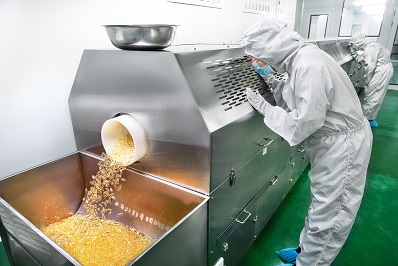
Softgel production. Format choice fixes unit weight, count per bottle, packaging route and shelf-life claim before commercial terms can be negotiated.
Short answer: the four formats are not interchangeable packaging styles. Each one carries a manufacturing envelope: total weight per unit, count per bottle, base material, packaging options, shelf life and storage condition. That envelope, not the format name, decides whether a formulation can be produced at your target dose, in your target bottle, under your label claim, at an order size you can actually fund.
This comparison sets out those four envelopes, then converts them into the purchasing terms and acceptance criteria a brand buyer should write into an agreement with a dietary supplement contract manufacturer. All specifications below are the published ranges of IVC Nutrition Corporation (IVC), a contract development and manufacturing organization (CDMO) serving the VMS (vitamins, minerals and supplements) and OTC market across nine international manufacturing sites in China, the USA, the UK, Canada and Germany.
Problem Definition: The Format Decision Is a Bottle-and-Claim Decision
Most buyers compare formats on consumer preference: swallowability, taste, perceived value. A manufacturer compares the same four options on six numbers: total weight per unit, count per bottle, base material, packaging material, shelf life and storage condition. Those six numbers decide first whether the product can be made at all, and then what one shipment weighs.
The mass difference is easy to underestimate. At the upper limit of the published specifications, a 60-count bottle holds roughly 72 g of capsules (60 x 1,200 mg), 72 g of softgels (60 x 1,200 mg), 174 g of tablets (60 x 2,900 mg) and 420 g of gummies (60 x 7 g). The label reads sixty count in every case, while shipped mass differs by almost six times, and bottle size, label area, case pack and freight follow it.
Dose ceiling moves in the same direction. A two-unit serving delivers up to 5,800 mg of tablet mass, up to 2,400 mg of capsule or softgel mass, and up to 14 g of gummy mass. Where a formula needs a high single-entity dose, the tablet envelope reaches furthest. Where the actives are oil-borne, the softgel shell carries them without a compression step.
Shelf life is the third constraint. Capsules, softgels and tablets are specified at 24 or 36 months from production date. Gummies are specified at 12, 18 or 24 months, with an explicit instruction to avoid high temperatures. A gummy SKU therefore commits the brand to faster rotation, tighter warehouse control and a different returns reserve than the same brand's tablet line.
Minimum order quantity is the fourth. It is quoted in pills, not bottles, and the conversion is not neutral. IVC publishes 0.3 million tablets, 1 million capsules and 0.6 million gummies as MOQ. At a 60-count bottle that is about 5,000 bottles of tablets, 16,667 bottles of capsules and 10,000 bottles of gummies. The format decision is, in practice, a cash and warehouse decision as much as a product decision.
Industry Background: What the 2025-2026 Landscape Changed
Tablets remain the volume format. Grand View Research reports that tablets held the largest share by dosage form in 2025, at 28.0% of the market. The specification data explains the persistence: a tablet envelope runs from 200 mg to 2,900 mg per unit and 60 to 1,000 units per bottle, which is the widest range of unit mass and count among the four formats compared here.
Gummies sit at the opposite end of that density curve. At 2-7 g per unit and 60-260 units per bottle, a gummy is roughly 7 to 35 times the mass of a 200 mg tablet, and its published shelf life is shorter. The gummy format buys consumer compliance and shelf presence; it pays for them in mass and rotation.
Regulation has converged on a single baseline. Under 21 CFR Part 111, anyone who manufactures, packages, labels or holds a dietary supplement must establish and follow current good manufacturing practice procedures and produce to a master manufacturing record, and that obligation does not vary by dosage form. Labeling follows DSHEA, while the US Federal Trade Commission's Health Products Compliance Guidance now replaces the earlier advertising guide for industry, separating claim substantiation from label compliance.
Ingredient scope has also tightened. The FDA issued final guidance on New Dietary Ingredient notifications covering identity and safety information in October 2026. For a buyer this means a novel active can be the reason a format launch slips: the format may be manufacturable while the ingredient notification is not yet in place.
Detailed Solution: The Four Manufacturing Envelopes
Each envelope below is the specification set a contract manufacturer can commit to in writing. Read them as production limits, not preferences.
Hard capsules, gelatin and vegetarian
Capsules run in sizes 000#, 00#, 0#, 1#, 2#, 3#, 4# and 5#, with a total weight of 350-1,200 mg per capsule including shell and content, and 60-1,000 capsules per bottle. The shell is either gelatin or vegetarian, which makes a gelatin-free claim a shell decision rather than a formulation change. Packaging covers pharmaceutical grade HDPE bottles, aluminium blisters and child-resistant closures. Shelf life is 24 or 36 months from production date, stored below 25 degrees Celsius, tightly sealed, away from moisture and direct sunlight.
Buyer implication: the 1,000-count ceiling supports club, pharmacy and value packs, and the vegetarian shell is the shortest route to a gelatin-free claim when the formula is a dry blend.
Softgels
Softgels run 250-1,200 mg total weight including shell and content, 60-450 per bottle, in oblong, oval, calabash, bone and heart shapes. Shell material is pectin-based or gelatin-based. Packaging and shelf life match the capsule envelope: HDPE bottle, aluminium blister, child-resistant closure, 24 or 36 months, below 25 degrees Celsius.
Buyer implication: the 450-count ceiling rules out the largest value packs, so a softgel SKU is normally sold at 60 to 120 count. Shape is a visible brand asset and also a tooling decision that has to be frozen before artwork begins.
Gummies
Gummies run 2-7 g per unit and 60-260 per bottle, in pectin-based, gelatin-based or mixed gel bases, with a mould library that includes bear, ring, heart, dome disk, grape, hexagon, berry, apple, cat paw, rectangular vortex, windmill, sakura, fanned orange, round flat berry, small conical and hemispherical formats. Packaging is a pharmaceutical grade HDPE bottle with child-resistant closure. Shelf life is 12, 18 or 24 months, stored below 25 degrees Celsius with an explicit instruction to avoid high temperatures.
Buyer implication: the shortest shelf-life band and the heat warning are the two clauses that most often fail in export distribution. The 260-count ceiling also caps pack architecture at mid-size bottles.
Tablets
Tablets run 200-2,900 mg total weight per tablet, 60-1,000 per bottle, in oval, oblong, round and special-shaped formats. Packaging covers HDPE bottles, aluminium blisters and child-resistant closures. Shelf life is 24 or 36 months, below 25 degrees Celsius, tightly sealed, away from moisture and direct sunlight.
Buyer implication: 2,900 mg is the highest unit weight in the set, which is what makes a one-tablet serving of a multi-mineral or high-dose formula possible. At the other end, a 200 mg tablet is the smallest unit available and the natural fit for high-count, low-dose lines.
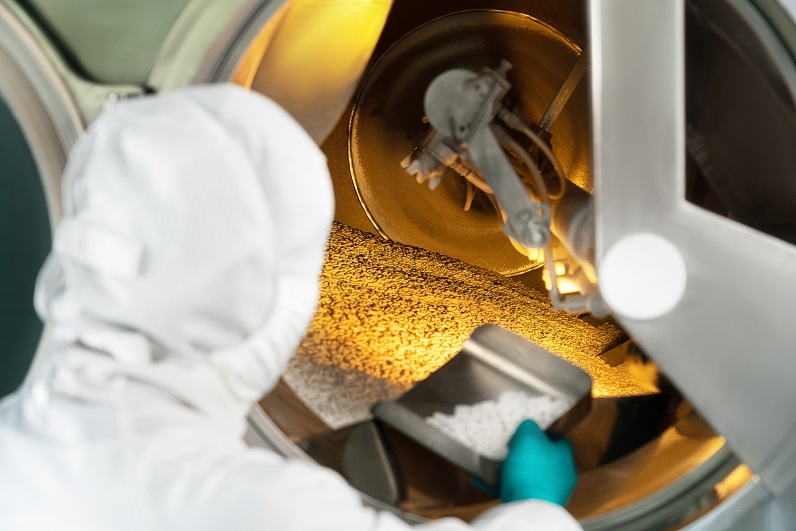
Tablet compression. The tablet envelope reaches 2,900 mg per unit, the highest single-unit mass of the four formats.
Step-by-Step Breakdown: From Label Claim to Purchase Order
Step 1. Convert the label claim into dose per serving and unit weight
Start from the supplement facts panel: how much of each active per serving, and how many units per serving. If a serving is two units, unit weight is half the serving weight. Comparisons fail at this step because a 1,000 mg serving is 1,000 mg of unit mass in a tablet, but two units of 500 mg in a capsule serving: same dose, different bottle count, different MOQ.
Step 2. Test the unit weight against the format envelope
Place the calculated unit weight inside the ranges: 200-2,900 mg for tablets, 350-1,200 mg for capsules, 250-1,200 mg for softgels, 2-7 g for gummies. A 2,500 mg serving at one unit per serving eliminates capsules, softgels and gummies. A 300 mg oil-borne active is a natural softgel. A 3 g chewable serving is a gummy by definition.
Step 3. Recalculate bottle count and shipped mass
Fix the count inside the format ceiling, which is 1,000 for capsules and tablets, 450 for softgels and 260 for gummies. Multiply by unit weight to get shipped mass per bottle. That figure sets case pack, pallet configuration and freight, and it is the number most often missing from a quotation request.
Step 4. Lock packaging and shelf-life claim together
Choose HDPE bottle or aluminium blister and add the child-resistant closure where the market requires it. Then take the shelf life from the format rather than from the marketing plan: 24 or 36 months is available for capsules, softgels and tablets, while gummies stop at 24 months. Storage instructions must match both the label and the stability programme, which means below 25 degrees Celsius, sealed, protected from moisture and light, and heat-protected for gummies.
Step 5. Convert to MOQ, capacity and lead time
Check MOQ in pills and translate it into bottles before artwork is approved: 0.3 million tablets, 1 million capsules and 0.6 million gummies at IVC. Then test monthly line capacity against the launch plan, stated at approximately 4.33 billion tablets, 1.33 billion capsules, 500 million hard capsules and 375 million gummies per month, and schedule against a lead time of 2.5 to 3 months.
Capacity is a group figure, not a single-line figure. IVC operates nine international manufacturing sites across China, the USA, the UK, Canada and Germany, with 5,000 employees, more than 100 engineers and 118,545 square metres of factory space. Annual output is stated at 52 billion tablets, 16 billion softgels, 6 billion hard capsules, 4.5 billion gummies, 1 billion probiotic sticks, 10,000 mt of powder and 126 million liquid sachets.

One of the nine IVC manufacturing sites. Format capability has to be confirmed against the site that will actually run the batch.
Step 6. Write acceptance criteria and certification scope into the agreement
IVC states 100% testing, so the agreement should define what is tested per batch and which record proves it. Certifications must be read by scope line, not by logo. NSF certification C0130721-HSCDS-7 is ANAB accredited against NSF/ANSI 455-2 - 2024, covering encapsulation, dry formulation, mixing and packaging operations and referencing 21 CFR Part 111, 117 and 11, valid to 14 January 2027. TGA GMP licence MI-2021-CE-05085-1 covers medicine manufacture and full product manufacture excluding packaging and labelling, valid to 23 May 2027, and is listed against tablet products. SSCI certificate FSS20250279_1 covers dietary supplements in the form of capsules, ingestible liquids, tablets and other, including granule and gummy, valid to 25 November 2026. FDA food facility registration 16044830522 is valid to 31 December 2026, and BRC certification 051A1202002I covers dietary supplement manufacturing including tabletting, encapsulating and packaging, valid to 11 March 2027.
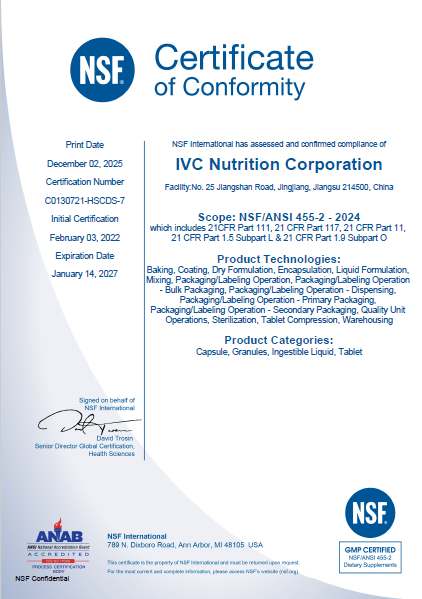
Certification is format-scoped. The scope line, not the certificate name, is what the buyer has to match to the purchase order.
Purchasing Terms and Acceptance Criteria
Once the format is fixed, the commercial and quality documents should carry the following. Each item below is traceable to a specification above.
- MOQ stated per format in pills, converted into bottles at the approved count, so that the purchase order and the production plan agree.
- Lead time of 2.5 to 3 months, treated as the planning window for artwork, stability and label approval as well as for manufacturing.
- Packaging material named exactly: pharmaceutical grade HDPE bottle, aluminium blister where the format allows it, child-resistant closure.
- Shelf-life claim taken from the format envelope, at 24 or 36 months for capsules, softgels and tablets, and 12, 18 or 24 months for gummies.
- Storage clause matching the specification: below 25 degrees Celsius, sealed, protected from moisture and light, with heat avoidance written in for gummies.
- Capacity reserved against the monthly line figure rather than the annual group total.
Acceptance criteria to write into the same agreement:
- Unit weight inside the approved range for the format.
- Count per bottle inside the published range and verified against the master manufacturing record.
- Closure and blister integrity where those components are used.
- Shape and appearance against the approved reference: capsule size, softgel shape, gummy mould, tablet shape.
- Base material as declared: gelatin or vegetarian capsule, pectin or gelatin or mixed gel for gummies, pectin or gelatin shell for softgels.
- Batch record and 100% test documentation per lot.
- Certificate scope line naming the purchased format and remaining valid through the production window.
Use Cases: Matching Format to Market Scenario
- High-dose single-entity or mineral blend. The tablet envelope reaches 2,900 mg per unit and 1,000 units per bottle, so a one-unit serving is achievable without splitting the dose across two or three capsules.
- Oil-borne actives. A softgel at 250-1,200 mg total weight carries an oil or suspension fill directly, in shapes from oblong to calabash, heart and bone.
- Gelatin-free positioning. Choose the vegetarian capsule shell, or a pectin-based gummy or pectin-based softgel shell, without reformulating the actives.
- Consumer-compliance-led launch for a family audience. A 2-7 g gummy at 60-260 count fits the pack architecture, provided the brand accepts a 12 to 24 month shelf life and heat-protected storage.
- Club, pharmacy and value packs. A 1,000-count tablet or capsule bottle is inside the envelope; softgels cap at 450 and gummies at 260.
- Multi-market launch. A format mix across tablets, capsules, softgels and gummies can be sourced through nine manufacturing sites in China, the USA, the UK, Canada and Germany, and the brand supplies customers in more than 80 countries through these sites.
- When none of the four fits. A Chewable Burstlet runs 250-1,200 mg total weight, 60-450 per bottle, in ball, fish and calabash shapes, pectin-based or gelatin-based, with 24 or 36 months shelf life below 25 degrees Celsius. It delivers a chewable format without the 2-7 g mass of a gummy.
Comparison Table: Specification Matrix
This is the matrix to send to a formulator and to a packaging supplier at the same time. Every value comes from the published IVC specifications for each format.
| Parameter | Capsules | Softgels | Gummies | Tablets |
|---|---|---|---|---|
| Total weight per unit | 350-1,200 mg, shell plus content | 250-1,200 mg, shell plus content | 2-7 g | 200-2,900 mg |
| Count per bottle | 60-1,000 | 60-450 | 60-260 | 60-1,000 |
| Base material | Gelatin capsule; vegetarian capsule | Pectin-based; gelatin-based | Pectin-based; gelatin-based; mixed gel-based | Compressed tablet |
| Shapes and sizes | Sizes 000#, 00#, 0#, 1#, 2#, 3#, 4#, 5# | Oblong, oval, calabash, bone, heart | Bear, ring, heart, dome disk, grape, hexagon, berry, apple, cat paw, rectangular vortex, windmill, sakura, fanned orange, round flat berry, small conical, hemispherical | Oval, oblong, round, special-shaped |
| Packaging options | HDPE bottle; aluminium blister; child-resistant closure | HDPE bottle; aluminium blister; child-resistant closure | HDPE bottle; child-resistant closure | HDPE bottle; aluminium blister; child-resistant closure |
| Shelf life | 24 or 36 months | 24 or 36 months | 12, 18 or 24 months | 24 or 36 months |
| Storage condition | Below 25 degrees Celsius, cool and dry, tightly sealed, protect from moisture and direct sunlight | Below 25 degrees Celsius, cool and dry, tightly sealed, protect from moisture and direct sunlight | Below 25 degrees Celsius, cool and dry, tightly sealed, protect from moisture and heat, avoid high temperatures | Below 25 degrees Celsius, cool and dry, tightly sealed, protect from moisture and direct sunlight |
| Published MOQ at IVC | 1 million capsules | Not published in this specification set, confirm per project | 0.6 million gummies | 0.3 million tablets |
| Mass per 60-count bottle at the upper weight limit | About 72 g | About 72 g | About 420 g | About 174 g |
The mass row is arithmetic from the upper specification limits, calculated as count multiplied by unit weight. Actual fill weight depends on the approved formula and is fixed at batch-record stage, so use the row for freight and pack planning rather than for costing.
FAQ
Does the dosage form change which certifications a dietary supplement contract manufacturer needs?
The US baseline does not change. Under 21 CFR Part 111, any facility that manufactures, packages, labels or holds a dietary supplement must operate under current good manufacturing practice and produce to a master manufacturing record, whether the unit is a capsule, softgel, gummy or tablet. What changes is the scope line on each certificate. The IVC SSCI certificate FSS20250279_1 names capsules, ingestible liquids, tablets and other forms including granule and gummy within its audit scope and runs to 25 November 2026. The NSF certification C0130721-HSCDS-7 covers encapsulation and dry formulation operations and runs to 14 January 2027. The TGA GMP licence MI-2021-CE-05085-1 covers full product manufacture and is listed against tablets to 23 May 2027. FDA food facility registration 16044830522 is valid to 31 December 2026. Check three things: that the scope line names the format being purchased, that the certificate stays valid across the production window, and that the standard appears in the audit scope rather than in marketing copy.
Can a single dietary supplement contract manufacturer run all four formats?
Only when it has separate lines and separate quality documentation for each. IVC lists gummy, softgel, tablet, hard capsule, probiotics and liquid in its production range and states monthly capacity of approximately 4.33 billion tablets, 1.33 billion capsules, 500 million hard capsules and 375 million gummies, with annual output of 52 billion tablets, 16 billion softgels, 6 billion hard capsules and 4.5 billion gummies across nine international manufacturing sites. A supplier that runs two formats forces a split SKU: a second quality system, a second label approval and a second lead time for the same product. The practical test in an RFQ is whether the format, the count per bottle and the packaging route are all quoted from the same site.
How does format choice change order size and cost structure?
Cost structure moves with unit mass, count, packaging route and shelf-life testing before any price conversation starts. A gummy at 2-7 g carries roughly 7 to 35 times the mass of a 200 mg tablet at the same unit count, so a 60-count gummy bottle ships about 420 g against about 72 g for a 60-count capsule bottle at the specification limits. The packaging route adds or removes a blister line. Shelf life sets how much stability work and finished-goods rotation the SKU needs: 24 or 36 months for capsules, softgels and tablets against 12, 18 or 24 months for gummies. MOQ then converts into cash, at 0.3 million tablets, 1 million capsules and 0.6 million gummies, which is roughly 5,000, 16,667 and 10,000 bottles at a 60-count. Model cost per serving and cost per shipped kilogram, not cost per bottle.
What should a sample request specify?
Five items make a sample request usable: the dose per serving and the target unit weight inside the format range; the count per bottle and packaging material, including HDPE bottle, aluminium blister and child-resistant closure; the base material, meaning gelatin or vegetarian capsule, pectin or gelatin or mixed gel for gummies, pectin or gelatin shell for softgels; the shelf-life target the format can support; and the target markets with the claims to be reviewed. A sample request without these five items returns a shape, not a decision.
How long does production take, and what pushes it out?
IVC states a lead time of 2.5 to 3 months. Three things move it: ingredient notification and claim review for novel actives, artwork and packaging approval once shape and count are fixed, and the stability work behind the shelf-life claim, where gummies with a 12, 18 or 24 month band leave less room for rework than a 36-month tablet. A specification-led sample and quotation request, sent with dose, count, format and market at the same time, shortens the front end of that window; IVC handles these through enquiry@ivcinc.cn and +86 15106137127.
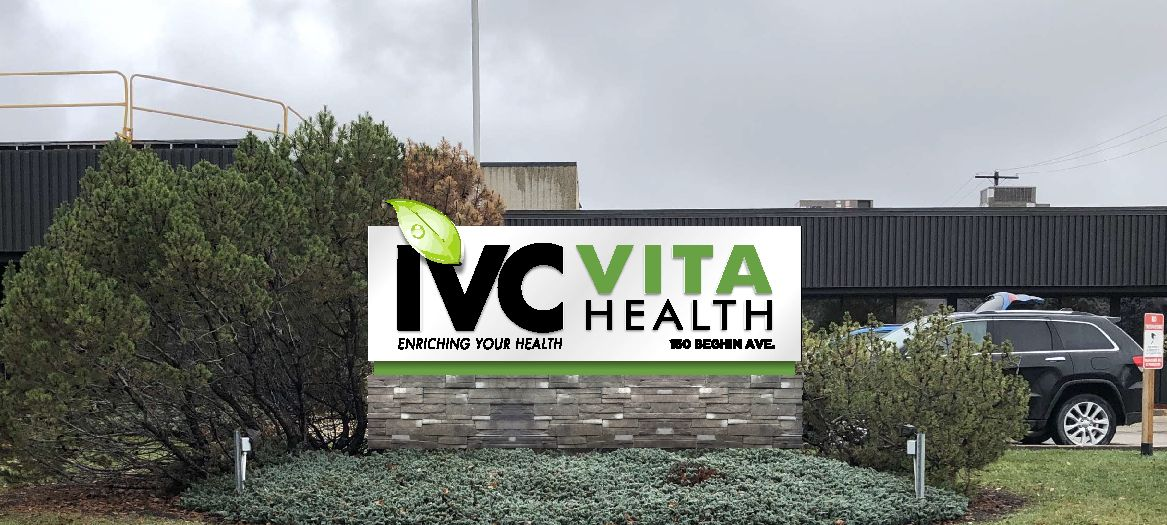
Multi-format supply means confirming which site, which line and which certificate scope will carry the batch.
Next step: test the envelope against your formulation
Send the dose per serving, the target count per bottle and the intended market. IVC will confirm which of the four formats the formulation fits, and what the MOQ and the 2.5 to 3 month lead time mean for your launch window.
Sample and quote requests: enquiry@ivcinc.cn | Tel +86 15106137127 | WhatsApp +1 213 865-3484. Specifications, certifications and full catalogue: IVC Nutrition Corporation brochure (PDF) | www.ivcinc.net
Conclusion
Format selection is a specification exercise with a marketing layer on top, and the specification always runs first. Capsules and tablets reach 1,000 units per bottle; softgels stop at 450 and gummies at 260. Tablets reach 2,900 mg per unit, capsules and softgels reach 1,200 mg, and gummies occupy a 2-7 g band that changes everything downstream, including freight, storage and how fast the SKU must rotate. Shelf life splits the same way, at 24 or 36 months against 12, 18 or 24 months.
A workable decision rule is therefore to select the format that satisfies unit weight and shelf life first, then confirm that count per bottle, packaging route and MOQ still make a fundable order, and only then write acceptance criteria that match the certificate scope to the format. Brands that reverse that order usually discover the constraint at the artwork stage, when changing it is expensive.
IVC Nutrition Corporation reports that it ranked first among private label VMS suppliers in the US market, excluding e-commerce, based on Circana data for the 52 weeks ending 24 March 2024, and operates with an export ratio of 50% across the EU, USA and APAC markets. Its four core formats are specified above, and the comparison only becomes a purchasing decision once those specifications are matched to a site, a certificate scope and an order quantity.
Have Questions or Need More Details?
Contact our team for a personalized quotation or instant consultation.
Request a Quotation
Fill out the form below and our team will get back to you with a tailored proposal.
WhatsApp Direct Chat
Prefer to chat in real-time? Message us on WhatsApp for instant assistance & quick answers.
- Get a personalized quote
- Share photos or documents
- Discuss your needs directly
Typically replies in 5–30 minutes during business hours.