
Format Spec Audit: Verifying Supplement Delivery Assurance
Delivery assurance from a dietary supplement contract manufacturer can be tested before a purchase order exists. The test is not a claim about capability; it is a comparison between the specifications the manufacturer publishes for each dosage form and the product you intend to buy. Tablets, capsules, softgels, gummies and chewable burstlets each carry a different net weight range, count per bottle, set of packaging options, shelf life and storage condition. Where those numbers exist and are format-specific, a buyer can audit them. Where they are replaced by a sentence about being a full-service partner, nothing can be audited yet.
This supplier-evaluation guide sets out that audit for buyers in the research and evaluation stage. It uses the published specifications of IVC Nutrition Corporation — a VMS and OTC CDMO operating nine international manufacturing sites across China, USA, UK, Canada and Germany — as a worked example of what format-level data looks like, and shows how to read each field as delivery evidence rather than as a marketing line.

A capability claim is not a delivery commitment
The failure mode in supplement sourcing is rarely a manufacturer that cannot make the product. It is a specification that was never pinned down: a count per bottle that does not match the artwork, a capsule weight the formula cannot reach inside the quoted shell, a blister pack the line does not quote for that format, or a gummy shelf life shorter than the distribution channel assumed. Each of those becomes a schedule problem, and schedule problems are what buyers eventually call delivery risk.
In this article, delivery assurance means one thing: the reproducible ability to supply a defined unit, in a defined container, with a defined shelf life, at a defined order size, inside a stated lead time. That definition produces four audit questions — is the unit defined, is the container defined, is the shelf life defined, is the order envelope defined — and each of them has a format-specific answer.
The regulatory floor your specification sits on
In the United States, the dietary supplement CGMP framework in 21 CFR Part 111 applies to manufacturers, packagers, labelers and holders of dietary supplements. FDA's small-entity compliance guidance describes the obligation in operational terms: establish and follow CGMP procedures so that the supplement is packaged and labeled as specified in the master manufacturing record.
The consequence for a buyer is direct. Count per bottle, unit weight and packaging are master manufacturing record fields, not brochure fields. A specification you cannot trace into those records describes an intention rather than a control.
Voluntary certification sits above that legal floor. An NSF/ANSI 455-2, BRC or TGA GMP certificate describes an audited system and a defined scope; it does not describe a lot. The distinction matters at evaluation stage, because buyers often use a certificate as a proxy for delivery reliability and then skip the specification review that would actually test it.
Public data does not close the gap either. The NIH Dietary Supplement Label Database catalogs label information for products sold in the United States and states that it does not verify conformity with FDA regulations. Presence in a label database is therefore not evidence of compliance, and it says nothing about whether a supplier can repeat a fill weight.
Two further obligations sit beside the CGMP rule and shape what a manufacturer must support: DSHEA governs how dietary supplements are labeled, and the FTC's Health Products Compliance Guidance governs advertising claims for health products. Neither is a delivery parameter, but both generate documents — label fields, claim substantiation — that a buyer should assign to a named party in the manufacturing agreement during the same evaluation.
The five format specification sets, read as delivery evidence
The ranges below are IVC Nutrition Corporation's published specifications, organised in the order a buyer would audit them. Two rules apply throughout: a range is an operating window, not a promise about a specific lot; and "not listed" is a question to put to the supplier, not a conclusion about capability.
Tablet — 200 mg to 2,900 mg per unit, 60 to 1,000 per bottle
Tablets carry the widest unit weight window in the set: 200 mg to 2,900 mg total tablet weight, at 60 to 1,000 tablets per bottle. Quoted shapes are oval, oblong, round and special-shaped. Packaging options are a Pharmaceutical Grade HDPE Bottle, an Aluminum Blister, and a Child-resistant Closure (CRC Cap). Shelf life is 24 or 36 months from production date, stored in a cool, dry place below 25°C, tightly sealed and protected from moisture and direct sunlight.
Audit reading: the 2,900 mg ceiling is what makes a high-dose single-tablet formula a tablet question rather than a capsule question. If a formula requires more than 2,900 mg in one unit, the published window does not cover it, and the useful next step is a written question about a split dose or a different format.
Capsule — sizes 000# to 5#, 350 mg to 1,200 mg
Hard capsules are quoted in sizes 000#, 00#, 0#, 1#, 2#, 3#, 4# and 5#, in gelatin or vegetarian shell, with a total weight per capsule — shell plus content — of 350 mg to 1,200 mg, at 60 to 1,000 capsules per bottle. Packaging is the same three-option set: HDPE bottle, aluminum blister and child-resistant closure. Shelf life is 24 or 36 months from production date, stored below 25°C and protected from moisture and direct sunlight.
Audit reading: the published weight window includes the shell. A buyer comparing a 1,200 mg capsule figure with a 1,200 mg softgel figure is comparing two different measurements, so ask which convention the supplier is quoting before the two formats are compared on dose.
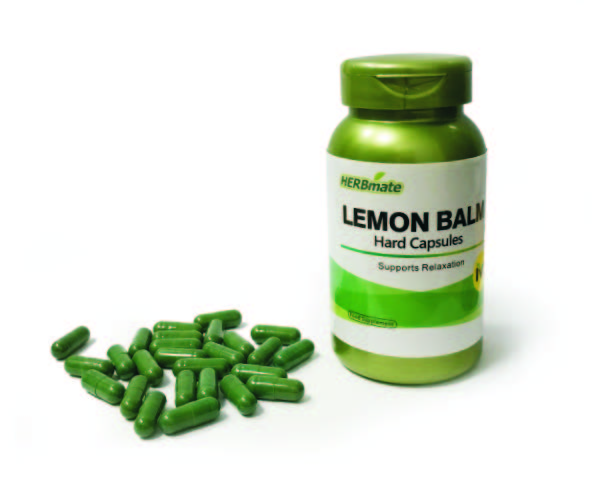
Softgel — 250 mg to 1,200 mg, 60 to 450 per bottle
Softgels are quoted in oblong, oval, calabash, bone and heart shapes, in pectin-based or gelatin-based shell, at 250 mg to 1,200 mg total weight per softgel and 60 to 450 softgels per bottle. Packaging options are HDPE bottle, aluminum blister and child-resistant closure; shelf life is 24 or 36 months below 25°C.
Audit reading: the count ceiling is less than half the tablet and capsule ceiling. A 500-count softgel SKU falls outside the published range even though the format itself is offered — that is a bottle-count question, not a formulation problem, and it is cheaper to answer before the pack brief is written.
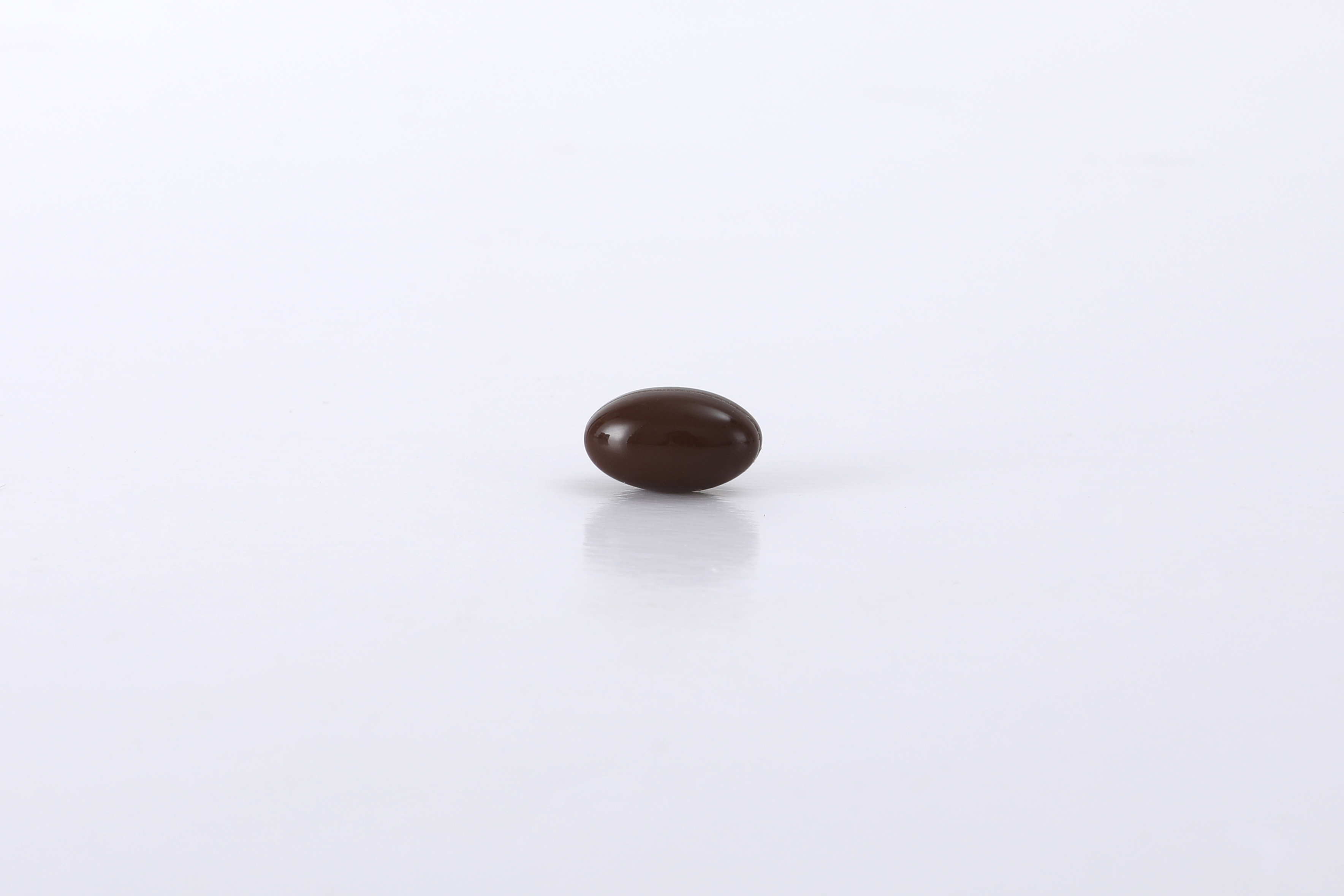
Chewable burstlet — 250 mg to 1,200 mg, 60 to 450 per bottle
Chewable burstlets are quoted in ball, fish and calabash shapes, pectin-based or gelatin-based, at 250 mg to 1,200 mg per burstlet, 60 to 450 per bottle, with HDPE bottle, aluminum blister and child-resistant closure, and 24 or 36 months of shelf life below 25°C.
Audit reading: the burstlet numbers are identical to the softgel numbers, which tests how carefully a specification has been read rather than skimmed. Identical windows do not mean identical processing. Ask which line, and which equipment, would run the batch; the facility record used in this example names high-speed automated tablet pressing and automated capsule filling among its matched solid-dosage equipment, and the buyer's job is to map the format onto a named line rather than assume it.

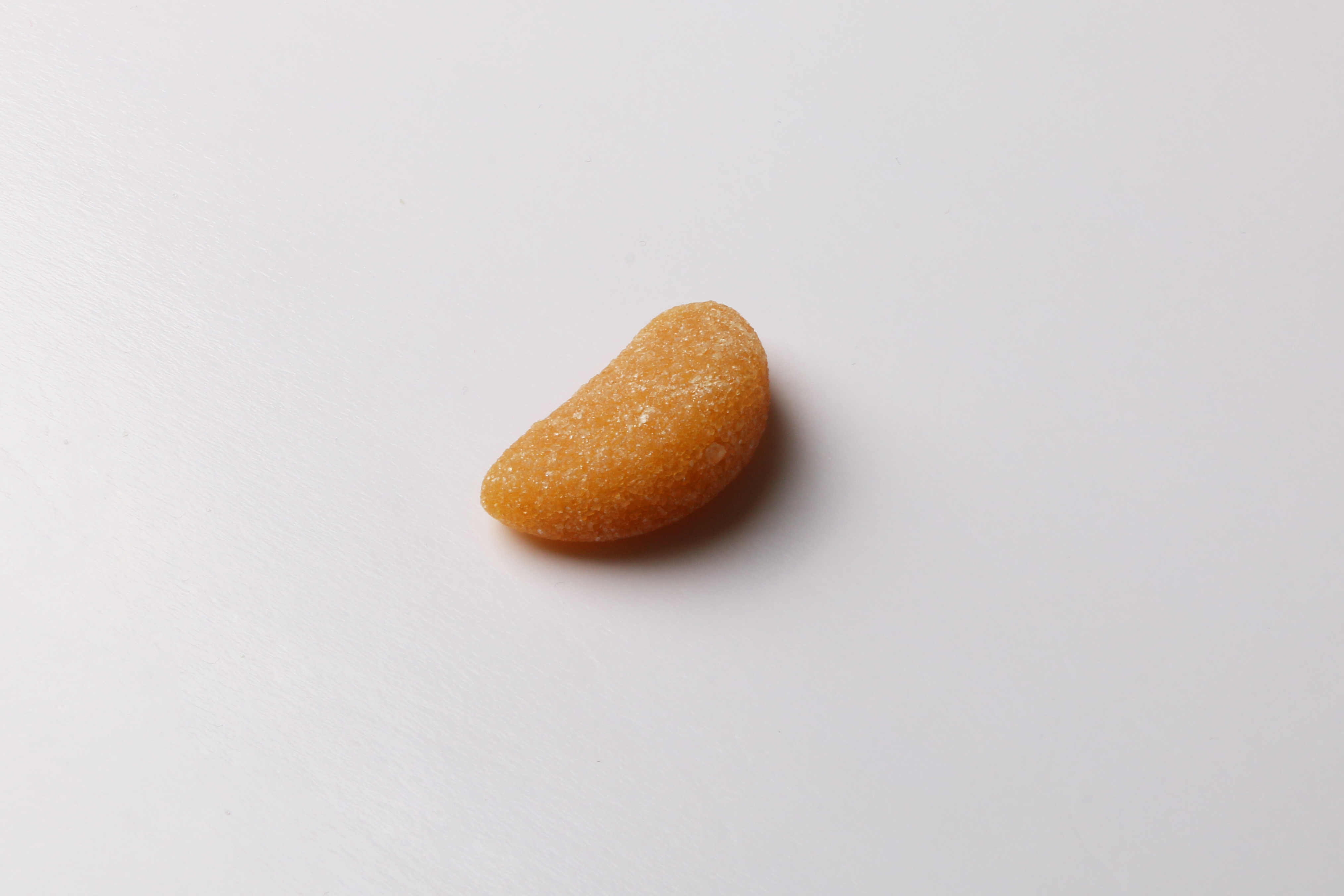
Gummy — 2 g to 7 g per piece, 60 to 260 per bottle, 12/18/24 months
Gummies are quoted at 2 g to 7 g total weight per piece and 60 to 260 gummies per bottle, in pectin-based, gelatin-based or mixed gel base, across 18 documented shapes including bear, ring, heart-shaped, hexagon, dome disk and small conical. The packaging options listed for this format are a Pharmaceutical Grade HDPE Bottle and a Child-resistant Closure (CRC Cap). Shelf life is 12, 18 or 24 months from production date, stored below 25°C in a cool, dry place, tightly sealed, protected from moisture and heat, and kept away from high temperatures.
Audit reading: three differences from the other four formats matter more than any other line in the file. Unit weight is expressed in grams rather than milligrams, so a dose conversation has to be converted before it is compared. The count ceiling is 260, well below the 1,000-unit ceiling on tablets and capsules. Aluminum blister appears in the tablet, capsule, softgel and chewable burstlet specifications but not in the gummy specification, so a blister-based gummy project needs written confirmation before packaging artwork is signed off. The shelf-life window also starts at 12 months, which is a planning input rather than a footnote.
Format comparison: the fields that decide delivery
Read the table as a set of constraints rather than as a product list. The row that matches your dosage form defines the window your order has to fit inside, and any SKU that falls outside it is a written question to the supplier.
| Format | Count per bottle | Unit weight range | Packaging options listed | Shelf life | Storage condition |
|---|---|---|---|---|---|
| Tablet | 60–1,000 | 200–2,900 mg total tablet weight | Pharmaceutical Grade HDPE Bottle, Aluminum Blister, CRC Cap | 24 or 36 months | Cool, dry, below 25°C; sealed; away from moisture and direct sunlight |
| Capsule (sizes 000#–5#) | 60–1,000 | 350–1,200 mg shell plus content | Pharmaceutical Grade HDPE Bottle, Aluminum Blister, CRC Cap | 24 or 36 months | Cool, dry, below 25°C; sealed; away from moisture and direct sunlight |
| Softgel | 60–450 | 250–1,200 mg total softgel weight | Pharmaceutical Grade HDPE Bottle, Aluminum Blister, CRC Cap | 24 or 36 months | Cool, dry, below 25°C; sealed; away from moisture and direct sunlight |
| Chewable burstlet | 60–450 | 250–1,200 mg total burstlet weight | Pharmaceutical Grade HDPE Bottle, Aluminum Blister, CRC Cap | 24 or 36 months | Cool, dry, below 25°C; sealed; away from moisture and direct sunlight |
| Gummy | 60–260 | 2–7 g total gummy weight | Pharmaceutical Grade HDPE Bottle, CRC Cap | 12, 18 or 24 months | Cool, dry, below 25°C; sealed; protected from moisture and heat; avoid high temperatures |
All values as published for IVC Nutrition Corporation. Shelf life runs from production date.
The audit, step by step
Run the audit in this order. Each step produces something you can place in the supplier file, which is the point: an evaluation that ends in a verbal answer has not produced evidence.
Step 1 — Write your own specification envelope first
Before reading the supplier's sheet, write down dosage form, target count per bottle, target unit weight, packaging type, target shelf life and destination climate. Without your own envelope, you will read the supplier's ranges as reassurance rather than as a comparison.
Step 2 — Test unit weight against the formula, format by format
Compare the required unit weight to the published window. A tablet at 200–2,900 mg, a capsule at 350–1,200 mg including shell, a softgel or burstlet at 250–1,200 mg, and a gummy at 2–7 g are four different scales, and a formula that fits one may not fit another. Where your number sits near an edge of the window, ask what changes at that edge.
Step 3 — Test count per bottle against the SKU
Counts run from 60 to 1,000 on tablets and capsules, 60 to 450 on softgels and burstlets, and 60 to 260 on gummies. Note where your count sits. A 250-count gummy is comfortably inside the range; a 300-count gummy is outside it and needs an answer in writing before the bottle specification is fixed.
Step 4 — Read the packaging row line by line
Pharmaceutical Grade HDPE Bottle, Aluminum Blister and Child-resistant Closure are listed for tablets, capsules, softgels and chewable burstlets; the gummy row lists the HDPE bottle and the CRC cap. If your channel requires blister packs, resolve that before artwork, not after.
Step 5 — Convert shelf life into an inventory decision
24 or 36 months on four formats and 12, 18 or 24 months on gummies is not a quality detail; it is the length of your usable inventory and the width of your shipping window. Ask which window applies to your specific formula and how stability data supports it, rather than assuming the longest figure in the menu applies.
Step 6 — Check storage against the shipping lane
Every format in this set requires storage below 25°C in a cool, dry place, tightly sealed and away from moisture and direct sunlight, with the gummy statement adding protection from heat and an explicit warning to avoid high temperatures. If the destination, the container or the retail shelf cannot hold that condition, the specification is telling you something about your route to market.
Step 7 — Turn the specification into an order envelope
Published commercial terms complete the picture: a minimum order quantity of 0.3 million tablets, 1 million capsules or 0.6 million gummies; a lead time of 2.5 to 3 months; and a monthly capacity of approximately 4.33 billion tablets and 375 million gummies alongside the other lines. Compare those figures to your launch forecast before treating a published specification as available capacity.
Step 8 — Verify the evidence that makes the range repeatable
Ask for the documents behind the specification: in-process control, microbiological testing, physical and chemical analysis, stability studies, GMP documentation and batch release, and 100% testing, all of which appear in the published quality and testing scope for the facility. A range without lot-level evidence is a starting point, not a conclusion.
What the numbers do not prove
- A range is not a lot result. A 250 mg softgel inside a 250–1,200 mg window says nothing about the weight of the softgels in the batch you receive. That evidence comes from in-process control, testing and batch release.
- A shelf-life menu is not a stability conclusion. "12/18/24 months" lists the windows offered; the window that applies to your formula has to be supported by stability work on that formula.
- Count per bottle is a packaging statement, not a fill-accuracy statement. It tells you what the container is specified for, not how consistently the line fills it.
- Capacity and lead time are planning figures. Monthly capacity of approximately 4.33 billion tablets describes an operating envelope, not reserved line time, and the 2.5 to 3 month lead time is the number you build the rest of the schedule backwards from.
- Certificates have scope and expiry, and neither is transferable. A certificate whose scope excludes packaging and labelling does not cover the packaging step in your project.
Three buying situations where the format specification changes the decision
A tablet brand adding a gummy. A tablet-led range typically plans on 24 or 36 months of shelf life and up to 1,000 units per bottle. The gummy specification offers 12, 18 or 24 months and a 260-unit ceiling, with unit weight expressed in grams. The line extension remains a supply-chain decision: a shorter shelf life means tighter inventory turns, and a lower count ceiling means more bottles per batch. Reading those two numbers early is cheaper than discovering them at artwork stage.
A retail channel that requires blister packs. Aluminum blister appears in four of the five format specifications. A buyer whose channel requires blister must confirm the gummy packaging route in writing before committing to the pack format, then confirm the carton and artwork approvals that follow from it.
An export programme into a hot climate. All five formats specify storage below 25°C, with the gummy statement adding an explicit instruction to avoid high temperatures. Port dwell time, inland transit and retail back-room conditions all sit between the factory and the consumer; if any of them is uncontrolled, the specification has already told you where the risk sits.
Format breadth also matters at scale, for a different reason. IVC's case record describes a 10-year relationship with retail, pharmacy-chain, membership-club and consumer-health brand clients across the US, UK, Germany and Australia, listing a quantity of USD 200 million across daily supplement and private-label applications, with gummies, softgels, tablets and capsules in scope and end-to-end services spanning formulation, manufacturing, quality, regulatory and packaging. That is a statement about multi-format supply, and it is only verifiable to the extent that each format's specification can be audited as above.
Certification scope: the part buyers skip
Certificates are commonly treated as a pass-or-fail gate. Used properly, each one is a scope document with a date on it, and both elements are procurement inputs.
- NSF/ANSI 455-2 – 2024, certificate C0130721-HSCDS-7, expiring 14 January 2027, with a scope covering baking, coating, dry formulation, encapsulation, liquid formulation, mixing and packaging/labeling operations, and referencing 21 CFR Part 111, 21 CFR Part 117, 21 CFR Part 11, and 21 CFR Part 1 Subpart L and Subpart O.
- BRC certification 051A1202002I, expiring 11 March 2027, covering the manufacturing of dietary supplements including vitamins, minerals, glucosamine and natural vegetable extract, with tabletting, granulating, coating, encapsulating and packaging named among the processes.
- TGA GMP certification MI-2021-CE-05085-1, expiring 23 May 2027, assessed against the PIC/S Guide to Good Manufacturing Practice for Medicinal Products, covering medicine manufacture and full product manufacture but excluding packaging and labelling; in the product mapping, this certificate is associated with the tablet line.
- FDA Food Facility Registration 16044830522 under 21 CFR Part 1 Subpart H, listed with an expiry of 31 December 2026.
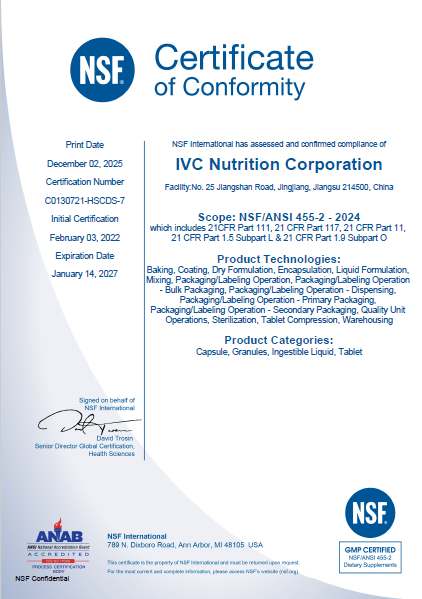
Three audit habits follow. First, read the scope against your own process steps: a certificate that excludes packaging and labelling leaves the packaging step to be evidenced by in-process control and batch release instead. Second, check that the scope names your dosage form — a scope written around tabletting and encapsulation may not name gummy production, which is a question for the supplier rather than an assumption in either direction. Third, check expiry against your production window; a certificate that lapses before your batch is a document to re-request, not a reason to assume failure. Certificate numbers, issuing bodies and dates belong in the supplier file next to the specification sheet.
Frequently asked questions
Does an NSF or GMP certificate prove that a manufacturer will meet its delivery specifications?
No. A certificate describes an audited quality system and the scope that was audited; it does not describe a batch. Certificate scope and expiry are the first filter in supplier evaluation, format-level specification ranges are the second, and lot documentation — in-process control, 100% testing, stability studies and batch release — is the third. A supplier can hold a current certificate and still quote a count per bottle that does not fit your SKU, which is why the specification review is not optional.
How do I check that a contract manufacturer can actually run my dosage form?
Ask for the format-level specification rather than the company capability page, and require five fields for that format: count per bottle, unit weight range, packaging options, shelf life and storage condition. For example, IVC Nutrition Corporation publishes 2–7 g per gummy with 60–260 gummies per bottle and 12/18/24 months of shelf life, against 200–2,900 mg per tablet at 60–1,000 tablets per bottle and 24/36 months. If your SKU sits outside the published range, or the supplier answers verbally, treat the capability as unverified until it is confirmed in writing.
Which specification fields drive cost the most?
Three fields dominate in this set. Order size against minimum order quantity is the first: 0.3 million tablets, 1 million capsules or 0.6 million gummies are the published minimums, so a small launch can be constrained before price is discussed. Packaging is the second, because the choice between a Pharmaceutical Grade HDPE Bottle with a child-resistant closure and an Aluminum Blister changes the packing step. The third is shelf life, since a 12-month gummy window and a 36-month tablet window imply different stability work and different inventory carrying assumptions. Unit weight and count per bottle then determine what the sample has to demonstrate.
What should a sample request include so that it tests delivery capability?
A sample tests the order you describe, so describe the order: dosage form, count per bottle, target unit weight inside the published range, packaging type including closure, target shelf life and destination climate. A gummy sample supplied loose, or a tablet sample in a different count than your planned SKU, confirms that the formula exists but says nothing about the packaging and shelf-life window you are buying. Ask also for the specification confirmation in writing, so that the sample and the quotation refer to the same numbers.
What lead time should a buyer plan around?
IVC publishes a lead time of 2.5 to 3 months. Treat that as production time and place the other steps ahead of it: specification confirmation, sample approval, stability and documentation, then the production slot. A buyer who starts the specification audit inside the lead-time window has already lost the schedule, which is the practical reason to audit format specifications at evaluation stage rather than at order stage.
Where can I get the full specification set for each format?
IVC Nutrition Corporation publishes format-level specifications for tablets, capsules, softgels, gummies and chewable burstlets, covering count per bottle, unit weight, packaging options, shelf life and storage. The company brochure is available for download at https://cdn.socialarks.com/sbsp//common/2026/0403/69cf49a48bbc0.pdf, and format-specific confirmation, samples or a quotation can be requested from enquiry@ivcinc.cn.
Conclusion
Delivery assurance is a specification you can hold, not a claim you have to believe. The sequence is short: write your own envelope, read the format-level ranges for unit weight and count, read the packaging row line by line, convert shelf life and storage into inventory and route decisions, then confirm the commercial envelope of MOQ, lead time and capacity and the certificate scope behind them. Five formats with different numbers will produce five different answers, and that difference is the evidence.
For IVC Nutrition Corporation, the published set reads: tablets at 200–2,900 mg and 60–1,000 per bottle; capsules in sizes 000# to 5# at 350–1,200 mg and 60–1,000 per bottle; softgels and chewable burstlets at 250–1,200 mg and 60–450 per bottle; gummies at 2–7 g and 60–260 per bottle with 12, 18 or 24 months of shelf life; all formats stored below 25°C, with HDPE bottle, aluminum blister and child-resistant closure listed across four of the five. If a field in that set does not match your SKU, the correct next step is a written confirmation rather than an assumption, and the specification file is where that confirmation belongs.

To take the audit further, request the format specification sheet for your dosage form and a sample brief that matches your intended count, packaging and shelf-life window, or download the company brochure at https://cdn.socialarks.com/sbsp//common/2026/0403/69cf49a48bbc0.pdf.
Have Questions or Need More Details?
Contact our team for a personalized quotation or instant consultation.
Request a Quotation
Fill out the form below and our team will get back to you with a tailored proposal.
WhatsApp Direct Chat
Prefer to chat in real-time? Message us on WhatsApp for instant assistance & quick answers.
- Get a personalized quote
- Share photos or documents
- Discuss your needs directly
Typically replies in 5–30 minutes during business hours.