
Matching Supplement Formats to VMS and OTC Scenarios
Application Guide: for Contract Manufacturers
Short answer: supplement format selection is not a marketing choice — it is a five-variable constraint match. A format only works for a VMS or OTC-adjacent project when the target fill weight, the count per bottle, the packaging material, the declared shelf life and the storage condition all fall inside the range that format can actually be produced and packed in. If one of the five variables sits outside its range, the brief has to change, not the tolerance.
This guide is written for brand owners, importers, private label programme managers and procurement teams who already understand their product concept and now have to convert it into a manufacturing specification. It walks through the five principal dosage forms — tablet, hard capsule, softgel, gummy and Chewable Burstlet — and shows which project scenarios each one fits, using the parameter ranges published for IVC Nutrition Corporation.
IVC Nutrition Corporation (IVC) is a CDMO operating in the VMS (vitamins, minerals and supplements) and OTC market, founded in 1998 and running nine international manufacturing sites across China, the USA, the UK, Canada and Germany, with more than 5,000 employees and a stated export ratio of 50% across EU, USA and APAC markets.

Solid dosage production area — the physical constraint behind every format decision discussed in this guide.
Problem Definition: Where Format-to-Scenario Mismatch Actually Starts
Format mismatch almost never begins with the format itself. It begins with a brief that states a dose and a market position but leaves the physical parameters open, and then asks a contract manufacturer to make it work. Three failure patterns repeat across VMS and OTC-adjacent projects.
- Fill weight outside the format band. A tablet brief can carry 200 mg to 2,900 mg per tablet. A gummy carries 2 g to 7 g per unit. A formula that is trivial in one format can be impossible in another at the same dose.
- Count per bottle outside the format ceiling. Tablets and hard capsules are packed at 60 to 1,000 units per bottle; softgels and Chewable Burstlets at 60 to 450; gummies at 60 to 260. A 500-count value pack is therefore a tablet or capsule question, not a gummy question.
- Packaging assumed rather than confirmed. Pharmaceutical-grade HDPE bottles and child-resistant closures (CRC caps) are stated across all five formats, but aluminium blister is stated for tablets, capsules, softgels and Chewable Burstlets only — not for gummies.
Decision rule: before a format is proposed, the brief should already state the target fill weight, the count per bottle, the intended packaging material, the shelf-life target and the storage statement. Any of the five left open will be resolved by the manufacturer's default, not by the brand's requirement.
Industry Background: Why Format Fit Is a Procurement Question, Not a Design Question
Dosage form is one of the few specification decisions that is simultaneously a manufacturing, packaging and regulatory decision. That is why it dominates contract manufacturing briefs. Tablets held the largest share by dosage form in 2025 at 28.0%, according to Grand View Research's dietary supplements contract manufacturing market report — a position built on the widest weight and count band of any solid format, not on consumer preference alone.
On the demand side, the US market alone offers a large public record of what compliant supplement labels look like. The NIH Office of Dietary Supplements operates the Dietary Supplement Label Database, which catalogues information printed on labels of dietary supplement products sold in the United States and, per its published description, contains more than 200,000 labels covering ingredient names and forms, ingredient amounts, label statements, manufacturer or distributor information, health-related claims and warning statements. That database is a useful benchmark for the label fields a format decision will eventually generate — but the same source states that it does not verify whether submitted labels conform to FDA regulations, so it supports product benchmarking, not compliance proof.
Regulatory framing sits around the format, not inside it. Dietary supplement manufacturers, packagers, labelers and holders in the US operate under the current good manufacturing practice framework in 21 CFR Part 111, and FDA guidance describes that rule as requiring procedures that ensure the product is packaged and labeled as specified in the master manufacturing record. In practice this means the format, the packaging material and the storage statement must be documented before production — a specification gap at brief stage becomes a documentation gap at batch release.
Detailed Solution: The Five Formats and What Each One Is Built to Carry
The table below reproduces the published parameter ranges for the five formats. It is the first thing a buyer should test a brief against, because every later decision — packaging, count, shelf life, channel — is bounded by it.
| Parameter | Tablet | Hard Capsule | Softgel | Gummy | Chewable Burstlet |
|---|---|---|---|---|---|
| Count per bottle | 60–1,000 tablets | 60–1,000 capsules | 60–450 softgels | 60–260 gummies | 60–450 Chewable Burstlets |
| Total weight per unit (shell + content) | 200 mg–2,900 mg | 350 mg–1,200 mg | 250 mg–1,200 mg | 2 g–7 g | 250 mg–1,200 mg |
| Declared shelf life from production date | 24 / 36 months | 24 / 36 months | 24 / 36 months | 12 / 18 / 24 months | 24 / 36 months |
| Packaging material stated | Pharmaceutical Grade HDPE Bottle; Aluminum Blister; CRC Cap | Pharmaceutical Grade HDPE Bottle; Aluminum Blister; CRC Cap | Pharmaceutical Grade HDPE Bottle; Aluminum Blister; CRC Cap | Pharmaceutical Grade HDPE Bottle; CRC Cap | Pharmaceutical Grade HDPE Bottle; Aluminum Blister; CRC Cap |
| Storage condition | Cool, dry place below 25 °C; tightly sealed; protect from moisture and direct sunlight | Cool, dry place below 25 °C; tightly sealed; protect from moisture and direct sunlight | Cool, dry place below 25 °C; tightly sealed; protect from moisture and direct sunlight | Below 25 °C, cool dry place; tightly sealed; protect from moisture and heat | Cool, dry place below 25 °C; tightly sealed; protect from moisture and direct sunlight |
Tablet: the widest band in both directions
A tablet contract manufacturer works with the only format that spans both the widest weight range (200 mg to 2,900 mg) and the highest count ceiling (60 to 1,000 tablets per bottle). Shapes include oval, oblong, round and special-shaped. For projects where the dose per serving is heavy — mineral blends, joint formulas, high-dose single nutrients — the tablet band is usually the only solid format that absorbs the formula without splitting the serving into multiple units.
The same band also makes tablets the natural answer to large-count retail packs: a 500- or 1,000-count bottle is producible as a tablet or a capsule, and not as a softgel, gummy or Chewable Burstlet.
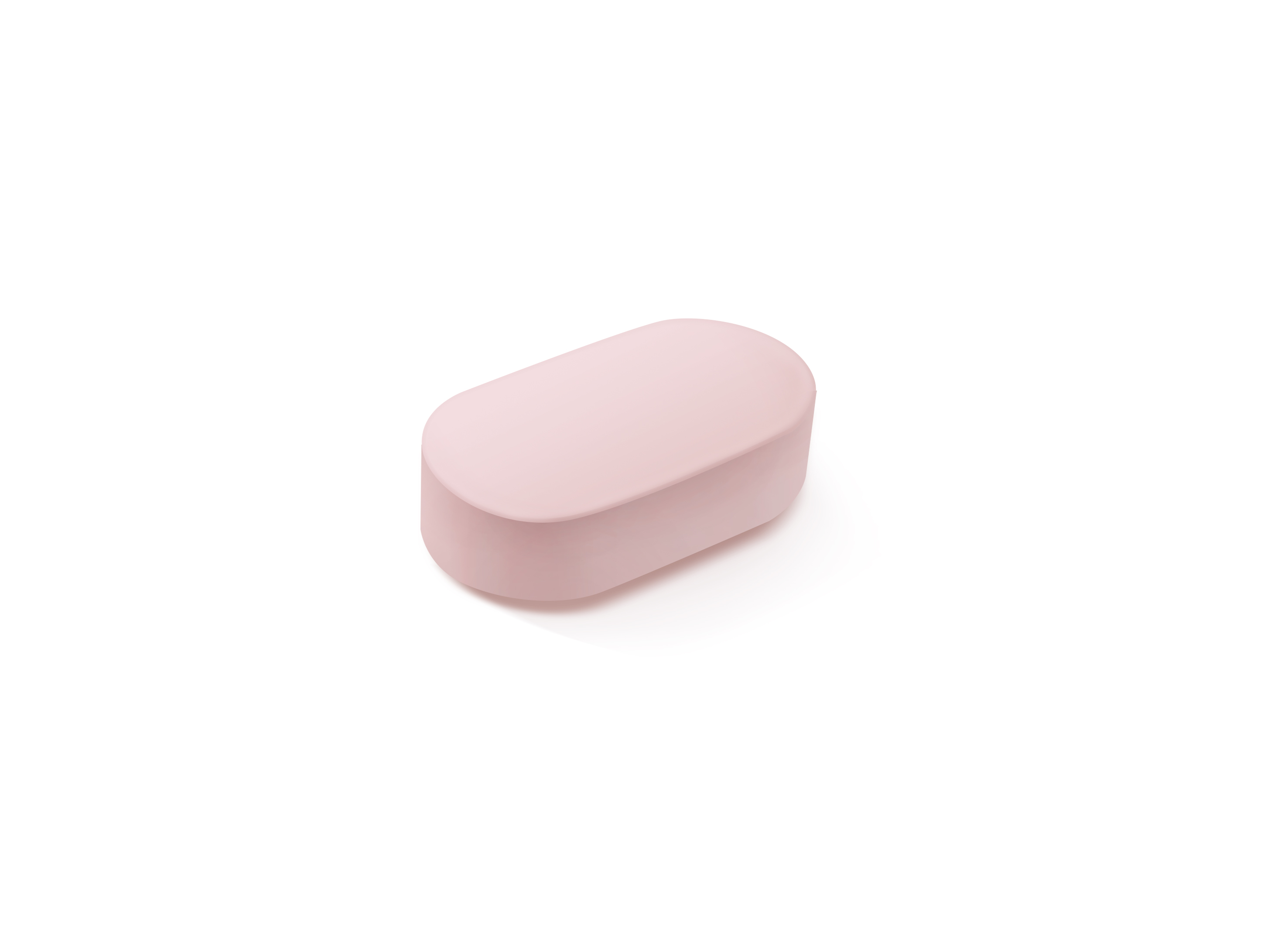
Tablet format, multivitamin application — wide weight band and 60–1,000 count per bottle.
Hard capsule: dose titration across a product family
Hard capsules run from size 000# to size 5#, with a total weight per capsule of 350 mg to 1,200 mg and 60 to 1,000 capsules per bottle. The shell can be gelatin or vegetarian. For a hard capsule contract manufacturer, the practical value of sizes 000# to 5# is that one formula can be offered as a family — the same blend at two or three fill sizes — without changing the format, the packaging line or the storage statement.
The vegetarian shell option is what makes the capsule format the default answer for vegetarian and vegan positioning, where a gelatin softgel or gelatin gummy would break the claim.
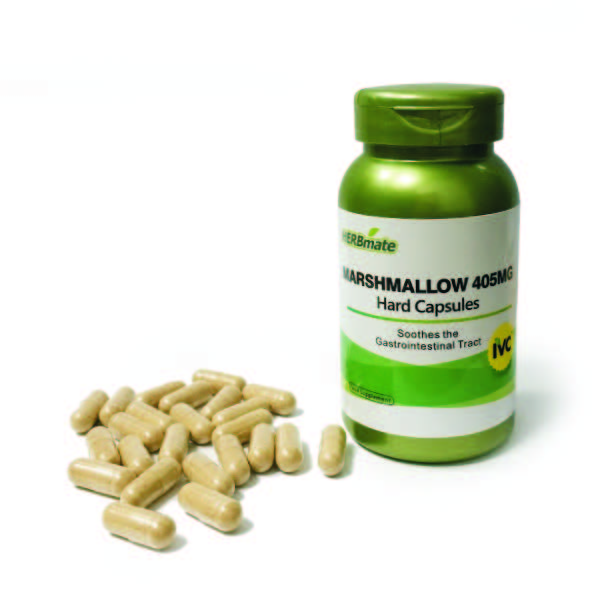
Hard capsule format — available in gelatin and vegetarian shells, sizes 000# to 5#.
Softgel: oil-based fills and shape-led positioning
Softgels are stated at 250 mg to 1,200 mg per softgel, 60 to 450 softgels per bottle, in pectin-based or gelatin-based shells, with oblong, oval, calabash, bone and heart shapes available. The format is built around oil and oil-soluble fills — fish oil, flaxseed oil, CoQ10, vitamin E, evening primrose, lutein and zeaxanthin appear in the published product range.
The constraint to respect is the count ceiling. A 450-softgel bottle is the top of the band; a softgel brief that targets a 600-count club pack will need a second bottle size or a format change.
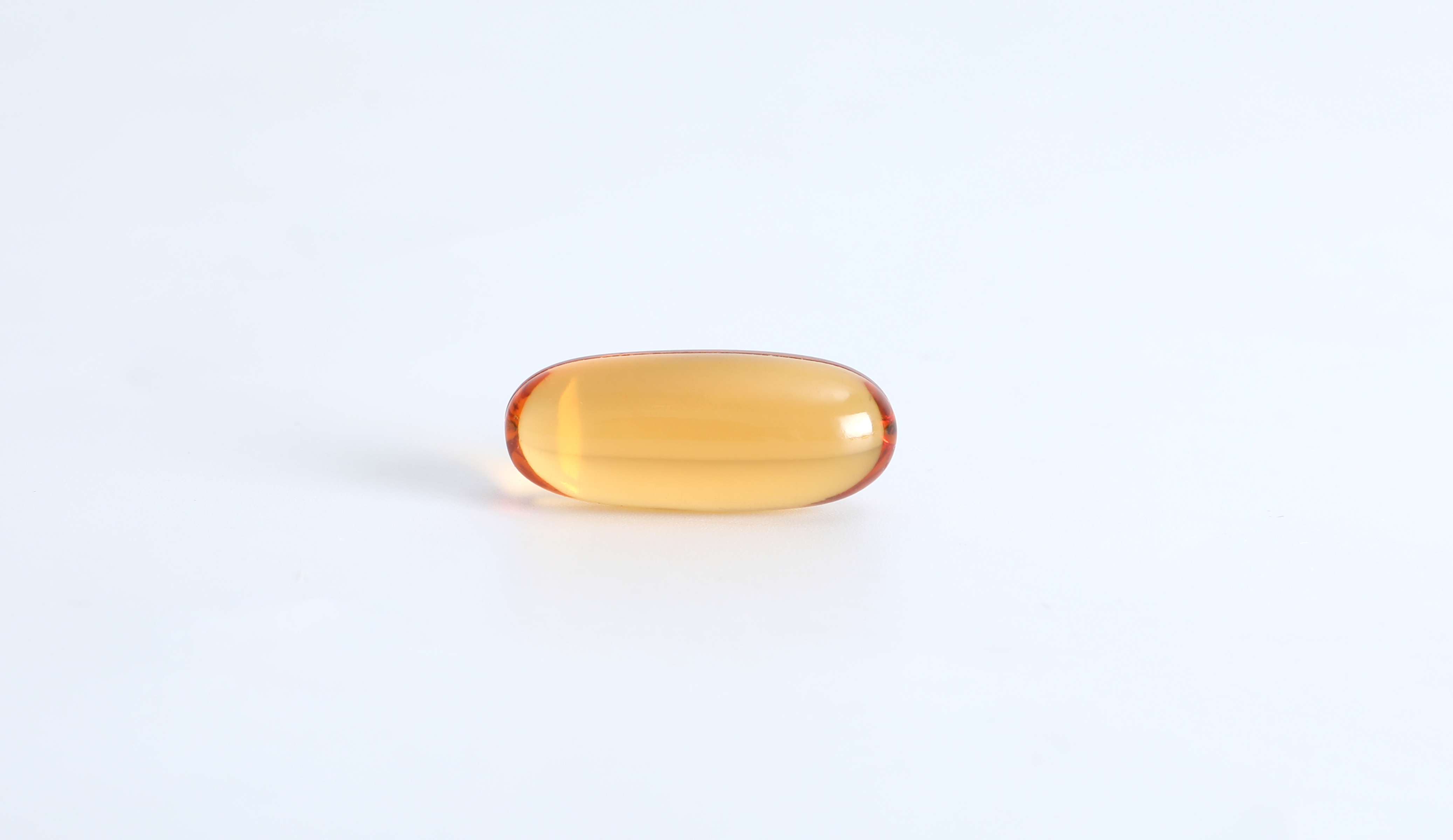
Softgel format — 250–1,200 mg per softgel, 60–450 per bottle, pectin- or gelatin-based shell.
Gummy: the tightest band, and the only format without a stated blister option
A gummy dietary supplement contract manufacturer works within 2 g to 7 g per gummy and 60 to 260 gummies per bottle, in pectin-based, gelatin-based or mixed gel systems, with shapes including small conical, dome disk, hemispherical, hexagon, heart-shaped, bear, ring and several fruit and botanical forms. Declared shelf life is 12, 18 or 24 months from production date — a narrower set than the 24/36 months stated for tablets, capsules, softgels and Chewable Burstlets.
Two consequences follow directly. First, the unit weight is stated in grams, not milligrams: a gummy is a delivery vehicle for a bolus that a tablet or capsule could not carry at the same count. Second, the stated packaging material for gummies is pharmaceutical-grade HDPE bottle with CRC cap; aluminium blister is not listed for this format, so a project that requires blister presentation cannot use a gummy.
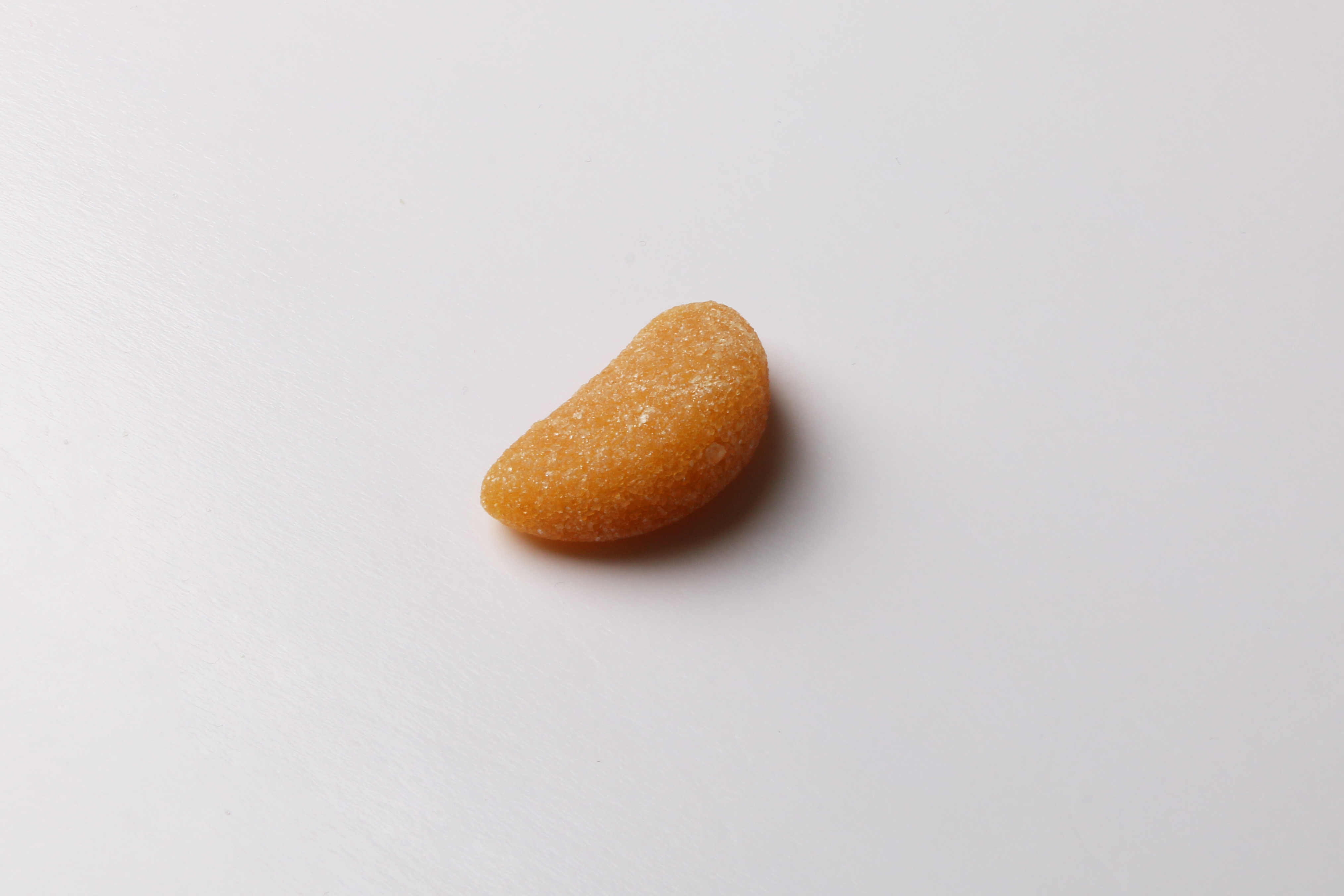
Gummy format — 2–7 g per unit, 60–260 per bottle, 12/18/24-month declared shelf life.
Chewable Burstlet: the middle band for chewable, water-free dosing
Chewable Burstlets are stated at 250 mg to 1,200 mg per unit and 60 to 450 per bottle, in ball, fish or calabash shapes, in pectin-based or gelatin-based material, with 24/36-month declared shelf life and the full packaging set of HDPE bottle, aluminium blister and CRC cap. In practice the format fills the gap between softgel and gummy: it keeps the fast, water-free consumption experience while retaining a milligram-scale weight band and the full packaging range.

Chewable Burstlet format — 250–1,200 mg per unit, 60–450 per bottle, blister-compatible.
Packaging selection: HDPE bottle, aluminium blister, or CRC cap
Packaging is where most briefs quietly change scope. The published matrix is short enough to memorise, and it eliminates several plausible-looking combinations immediately.
| Packaging option | Tablet | Hard Capsule | Softgel | Gummy | Chewable Burstlet |
|---|---|---|---|---|---|
| Pharmaceutical Grade HDPE Bottle | Stated | Stated | Stated | Stated | Stated |
| Aluminum Blister | Stated | Stated | Stated | Not stated | Stated |
| Child-resistant Closure (CRC Cap) | Stated | Stated | Stated | Stated | Stated |
How to read it: HDPE bottles and CRC caps are the common packaging baseline across all five formats, so any count-band decision can stay in a bottle. Aluminium blister is the differentiator. It is available for tablet, hard capsule, softgel and Chewable Burstlet, and it is the option that supports unit-dose presentation for pharmacy, travel and OTC-adjacent channels where a bottle is not the expected pack. Whether a product actually needs a blister, or a child-resistant closure, is a market, labelling and category decision that the brand owner settles with its regulatory advisor — the specification question here is narrower and answerable: is the pack the brief requires on the stated list for that format?
Step-by-Step Breakdown: Converting a Brief into a Format-Fit Specification
Step 1 — Fix the dose per serving and convert it into a fill weight. Total weight per unit means shell plus content, not active ingredient. That distinction matters most for capsules and softgels, where the shell consumes part of the stated band, and it is the reason a formula that looks comfortable on paper can sit at the top of a range in production.
Step 2 — Test the fill weight against the format band. Tablet 200–2,900 mg; hard capsule 350–1,200 mg; softgel 250–1,200 mg; Chewable Burstlet 250–1,200 mg; gummy 2–7 g. If the target weight falls outside the band, the answer is a different format or a different serving size — not a tolerance request.
Step 3 — Set the count per bottle against the ceiling. 60–1,000 for tablets and capsules; 60–450 for softgels and Chewable Burstlets; 60–260 for gummies. This single step decides whether a large-count retail pack is possible at all, and it is the fastest way to eliminate half the candidate formats.
Step 4 — Choose the packaging material. Bottle or blister, with or without a child-resistant closure. Gummies are bottle-only in the stated list. Blisters normally mean a different packing line, a different unit count logic and a different storage statement on the label.
Step 5 — Set the shelf-life target inside the declared shelf life. 24 or 36 months for tablets, capsules, softgels and Chewable Burstlets; 12, 18 or 24 months for gummies. A market that expects a 36-month dating will not accept a gummy specification as stated; that is a commercial decision, not a production negotiation.
Step 6 — Lock the storage statement and the documentation. All five formats are stored below 25 °C, kept tightly sealed, and protected from moisture and direct sunlight, with gummies additionally protected from heat. In a CGMP environment (21 CFR Part 111 for the US market) these statements must be reflected in the master manufacturing record and the batch documentation, so they are worth fixing before the first quotation rather than after the first batch.
Use Cases: Matching Scenarios to Formats
The scenarios below are the recurring project types that a dietary supplement contract manufacturer receives. Each one is defined by constraints, not by product category, and each maps to a specific format for a specific reason.
| Project scenario | Primary constraint | Format that fits | Reason from the stated parameters |
|---|---|---|---|
| Adult daily multivitamin, large-count retail pack | 500–1,000 count per bottle | Tablet or hard capsule | Only these two formats are stated up to 1,000 units per bottle |
| High-dose mineral, joint or single-nutrient formula | Heavy dose per serving | Tablet | Widest stated band, up to 2,900 mg per tablet |
| Omega-3, CoQ10, vitamin E or evening primrose oil | Oil-based fill | Softgel | 250–1,200 mg per softgel, pectin- or gelatin-based shell |
| Children's or water-free daily format | Chewable, no water needed | Gummy or Chewable Burstlet | 2–7 g per gummy (60–260 count) or 250–1,200 mg per Burstlet (60–450 count) |
| Pharmacy, travel or unit-dose presentation | Blister pack | Tablet, capsule, softgel or Chewable Burstlet | Aluminium blister is stated for these four formats, not for gummies |
| Vegetarian or vegan positioning | Non-gelatin shell or base | Vegetarian capsule, or pectin-based softgel / gummy / Burstlet | Vegetarian capsule material and pectin-based gel systems are stated |
| Child-resistant retail requirement | CRC closure | Any of the five formats | CRC cap is stated across all five formats |
| Long-dating export programme | 36-month shelf life | Tablet, capsule, softgel or Chewable Burstlet | 24/36-month shelf life stated; gummies are stated at 12/18/24 months |
Two scenario notes are worth separating from the table. First, count is often the real commercial driver rather than the format itself: a brand that wants a value-size bottle and a trial-size bottle from one formula is choosing between tablet and capsule, because only those two formats span 60 to 1,000 units. Second, OTC-adjacent projects usually push the packaging decision ahead of the format decision — if the channel expects a unit-dose blister, the format list narrows to four before any ingredient discussion begins.
Where a single supplier can hold several formats at once, the format decision becomes reversible at low cost. IVC's stated product range covers gummy, softgel, tablet, hard capsule, probiotics and liquid, produced across nine international manufacturing sites with a stated engineering team of more than 100 engineers and a facility footprint of 118,545 m².
Format Comparison Table
| Comparison dimension | Tablet | Hard Capsule | Softgel | Gummy | Chewable Burstlet |
|---|---|---|---|---|---|
| Positioning in the format set | Widest weight and count band | Dose titration via sizes 000#–5# | Oil-based fill specialist | Heaviest unit, lowest count ceiling | Chewable with full packaging range |
| Maximum count per bottle | 1,000 | 1,000 | 450 | 260 | 450 |
| Unit weight basis | 200–2,900 mg | 350–1,200 mg | 250–1,200 mg | 2–7 g | 250–1,200 mg |
| Shell / base options stated | Tablet | Gelatin; Vegetarian | Pectin-based; Gelatin-based | Pectin-based; Gelatin-based; Mixed Gel-based | Pectin-based; Gelatin-based |
| Shape options stated | Oval, oblong, round, special-shaped | Sizes 000#–5# | Oblong, oval, calabash, bone, heart | Multiple, including bear, ring, heart-shaped and fruit forms | Ball, fish, calabash |
| Blister-compatible | Yes | Yes | Yes | Not stated | Yes |
| Declared shelf life | 24/36 months | 24/36 months | 24/36 months | 12/18/24 months | 24/36 months |
FAQ
1. What must be fixed before a format is confirmed for a regulated market?
At minimum: fill weight, count per bottle, packaging material, shelf-life target and storage statement — because each of these appears in the documentation that a CGMP system requires. In the US market, dietary supplement manufacturers, packagers, labelers and holders operate under 21 CFR Part 111, and FDA guidance describes the rule as requiring procedures that ensure the product is packaged and labeled as specified in the master manufacturing record. Labeling obligations are also statute-based: the California Department of Public Health notes that dietary supplements must be labeled according to DSHEA, and the Federal Trade Commission's Health Products Compliance Guidance covers advertising claims, which is a separate layer from labelling. The format decision is the point where all of these become physical, so it should be closed before the brief is issued rather than after the first batch record.
2. Can one contract manufacturer cover tablets, capsules, softgels, gummies and Chewable Burstlets?
It can, if its stated product range includes all five. IVC Nutrition Corporation states a product range covering gummy, softgel, tablet, hard capsule, probiotics and liquid, produced across nine international manufacturing sites in China, the USA, the UK, Canada and Germany, with a stated engineering team of more than 100 engineers. The practical value of multi-format coverage is that a single formula can be re-platformed — for example, moving a 500-count brief from capsule to tablet, or adding a chewable version without changing supplier — instead of restarting qualification with a second manufacturer.
3. Two suppliers quote the same product differently — which specification gaps usually explain it?
Compare on five items, not on headline price: format, fill weight (shell plus content), count per bottle, packaging material, and shelf-life target. Differences on any one of these change what is being quoted. The most common hidden gap is count: the same brief can be a 500-count tablet or capsule, but not a 500-count softgel, gummy or Chewable Burstlet, because those formats are stated up to 450, 260 and 450 units per bottle respectively. The second most common gap is packaging: an aluminium blister pack and an HDPE bottle with a CRC cap are not interchangeable specifications. A like-for-like comparison requires all five items to be identical on both sides of the table.
4. How should a format be validated before committing to full production?
Validate the constraint, not the impression. Three checks close most of the risk: the target fill weight falls inside the stated band for that format; the target count per bottle falls inside the stated ceiling; and the intended packaging appears on the stated list for that format — remembering that gummies are stated with HDPE bottle and CRC cap, without an aluminium blister option. For label-level validation, the NIH Dietary Supplement Label Database is a public benchmark that catalogues label information for dietary supplement products sold in the United States and, per its published description, contains more than 200,000 labels including ingredient names and forms, amounts, claims and warning statements. It is a benchmarking tool, not a compliance proof: the same source states that it does not verify whether submitted labels conform to FDA regulations.
5. What is the fastest route from a product idea to a workable format recommendation?
Send the five parameters in writing: target dose per serving and total fill weight, count per bottle, preferred packaging material (bottle or blister, with or without a child-resistant closure), shelf-life target, and target market. With those fixed, a format recommendation and a packaging recommendation can be made against published ranges rather than against assumptions — and the answer is auditable, because every range is stated in advance. Lead time is not a single number across formats, counts and packaging materials, so it should be requested in writing against the specific specification rather than inferred from a general figure.
Next Step: Send a Format-Fit Brief to IVC Nutrition Corporation
If you have a VMS or OTC-adjacent project and you know the dose, the count and the pack, the next step is a specification review against the published ranges for tablet, hard capsule, softgel, gummy and Chewable Burstlet. IVC can respond with a format and packaging recommendation, a quotation request scope and the documentation requirements for your target market.
Download the corporate brochure for the full capability overview: IVC Nutrition Corporation Brochure (PDF)

Multi-format production means a brief can be re-platformed between dosage forms without restarting supplier qualification.
Conclusion
Format selection for VMS and OTC-adjacent projects resolves to five numbers and one list. The numbers are fill weight, count per bottle, declared shelf life, storage temperature and the unit weight basis; the list is the packaging options stated for each format. Tablets carry the widest band in both weight and count. Hard capsules add dose titration through sizes 000# to 5# and a vegetarian shell option. Softgels own the oil-based fill in a 250–1,200 mg band. Gummies take the heaviest unit at 2–7 g but cap at 260 per bottle, carry a 12/18/24-month shelf life and are stated for bottle packaging only. Chewable Burstlets sit between softgel and gummy with a full packaging range including aluminium blister.
When those parameters are fixed before the brief is issued, the format decision stops being a negotiation and becomes a check against a published range — and the packaging, labelling and CGMP documentation that follow are built on a specification that was correct from the start.
Parameter ranges, packaging materials, shelf life and storage conditions in this guide are as published for IVC Nutrition Corporation dosage forms. Market share reference: Grand View Research, dietary supplements contract manufacturing market report (tablets, 28.0% share by dosage form, 2025). Regulatory references: 21 CFR Part 111 (eCFR); FDA Small Entity Compliance Guide; California Department of Public Health on DSHEA labelling; US Federal Trade Commission Health Products Compliance Guidance; NIH Office of Dietary Supplements, Dietary Supplement Label Database.
Have Questions or Need More Details?
Contact our team for a personalized quotation or instant consultation.
Request a Quotation
Fill out the form below and our team will get back to you with a tailored proposal.
WhatsApp Direct Chat
Prefer to chat in real-time? Message us on WhatsApp for instant assistance & quick answers.
- Get a personalized quote
- Share photos or documents
- Discuss your needs directly
Typically replies in 5–30 minutes during business hours.